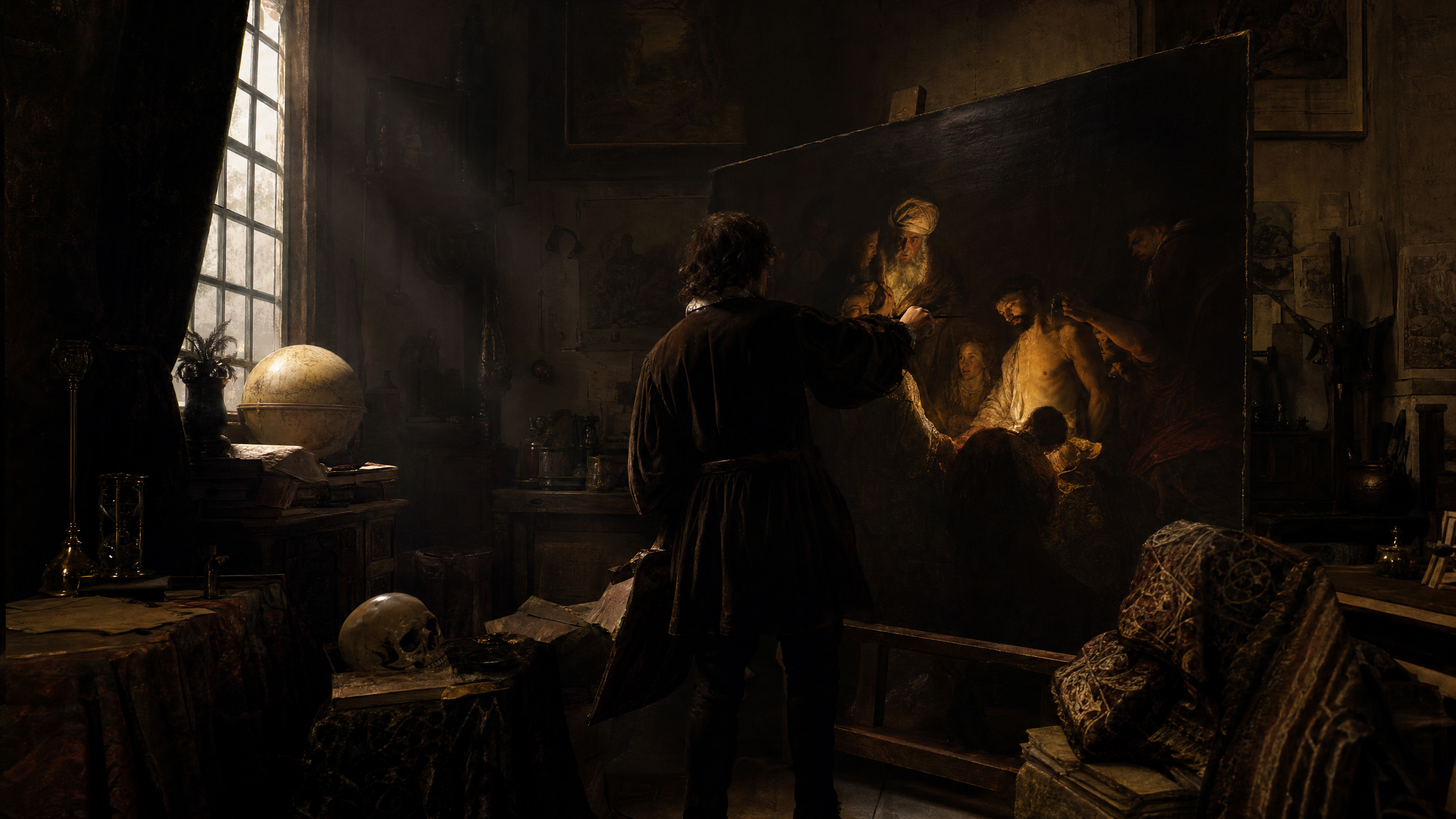
Historical Context
The world that made this art
The Baroque era, emerging around 1600, was deeply intertwined with the Counter-Reformation. The Catholic Church, seeking to reassert its dominance after the Protestant Reformation, utilized art as a powerful tool for propaganda and to inspire awe and devotion. This led to grand, dramatic, and emotionally charged works that aimed to engage the senses and intellect of the viewer. Absolute monarchs also embraced the Baroque style to project their power and authority, as exemplified by the opulent Palace of Versailles. The Dutch Golden Age saw a different manifestation of Baroque, with a focus on genre scenes, portraits, and still life, reflecting the mercantile wealth and Protestant values of the Netherlands. As the 18th century dawned, the Enlightenment began to shift cultural focus from religious fervor to reason and individual happiness. This intellectual movement fostered a reaction against the perceived heaviness and seriousness of Baroque, paving the way for Rococo. Rococo, originating in early 18th-century Paris, became associated with the French aristocracy and King Louis XV, emphasizing elegance, luxury, and lightheartedness. It reflected a society moving towards aristocratic pleasure and away from overt religious or political grandiosity.
Artistic Character
Baroque art is characterized by grandeur, drama, dynamism, and emotional intensity. It often employed chiaroscuro (intense light and dark contrasts) to create depth and a sense of theatricality. Movement, tension, and radiant colors were prominent. The visual arts—painting, sculpture, and architecture—were often integrated into a "total work of art" to convey a unified message. Subject matter frequently included religious scenes, mythological narratives, and portraits that emphasized the power of the sitter. Compared to the Renaissance's balanced proportions and classical restraint, Baroque was more flamboyant and expressive. Rococo art, evolving from Baroque, presented a lighter, more playful aesthetic. It moved away from the dramatic and serious tones of its predecessor, favoring soft colors, curvy lines, and an exuberant use of natural forms in ornamentation, particularly shells (rocaille). Rococo painting often depicted scenes of love, nature, amorous encounters, and aristocratic leisure, emphasizing frivolity and elegant eroticism. The style was characterized by its lightness, elegance, and intimacy, often seen in interior design and decorative arts, creating a sense of charm and grace rather than overwhelming power.
Key Artists
The painters & sculptors
Art meets history
Stories behind the works
Divine Intervention in a Tavern: How Caravaggio's Masterpiece Rekindled Faith
Witness the dramatic moment a tax collector's life is transformed by a beam of light, reflecting the Catholic Church's powerful message during a turbulent era.
The Divine Rapture: Bernini's Ecstasy of Saint Teresa and the Power of Faith
Experience the overwhelming spiritual passion captured in marble, a masterpiece designed to stir the souls of believers during a time of religious fervor.
The Secret Garden of Indulgence: Fragonard's 'The Swing' and the Twilight of the Ancien Régime
Uncover the scandalous secrets and playful excesses of the French aristocracy, immortalized in a painting that perfectly captures an era on the brink of collapse.
Curated viewing journey
Where to start looking
The Calling of Saint Matthew
Caravaggio
This painting is a perfect entry point to Baroque art, immediately immersing you in its signature drama and revolutionary use of light and shadow. It’s a powerful introduction to how art could engage viewers emotionally during a time of religious change.
What to look for
Notice the stark contrast between light and dark (chiaroscuro) that highlights Christ and Matthew, drawing your eye to the moment of divine intervention. Observe the realistic, almost gritty, depiction of the figures, bringing a sacred event into an everyday setting, a hallmark of Caravaggio’s style and the Counter-Reformation’s desire for relatable religious imagery.
Ecstasy of Saint Teresa
Gian Lorenzo Bernini
Bernini’s masterpiece is the epitome of Baroque sculpture, showcasing intense emotion, theatricality, and the fusion of different art forms. It’s an unforgettable experience that captures the spiritual fervor of the era.
What to look for
Focus on Saint Teresa’s expression of overwhelming spiritual rapture and the angel’s delicate yet purposeful gesture. Observe how Bernini uses the drapery to convey movement and emotion, and how the sculpture interacts with its architectural setting and hidden light source to create a truly immersive, almost cinematic, experience. This work powerfully communicates the Counter-Reformation’s emphasis on direct, emotional religious experience.
The Swing
Jean-Honoré Fragonard
This iconic painting offers a delightful and insightful entry into the Rococo era, contrasting sharply with the Baroque’s intensity. It perfectly encapsulates the playful, aristocratic, and often scandalous spirit of 18th-century French society.
What to look for
Admire the soft, pastel colors, the delicate brushwork, and the lush, overgrown garden setting that define the Rococo aesthetic. Notice the playful, flirtatious narrative: the young woman on the swing, her shoe flying off, and her two admirers. This scene reflects the carefree indulgence and private pleasures of the French aristocracy before the Revolution, a stark departure from the religious and political grandeur of the Baroque.
THE & CO. SERIES
See Also in This Era
The same historical moment, seen through different creative lenses.
Wolfgang & Co.
Classical Music
The elaborate ornamentation of Baroque fashion — wigs, brocades, lace — was the visual equivalent of Bach's counterpoint.
Explore this era →
Ernest & Co.
Literature
Molière, Racine, and Swift were writing in the same court culture that produced Baroque and Rococo fashion excess.
Explore this era →
AI-powered