Historical Context
The world that made this art
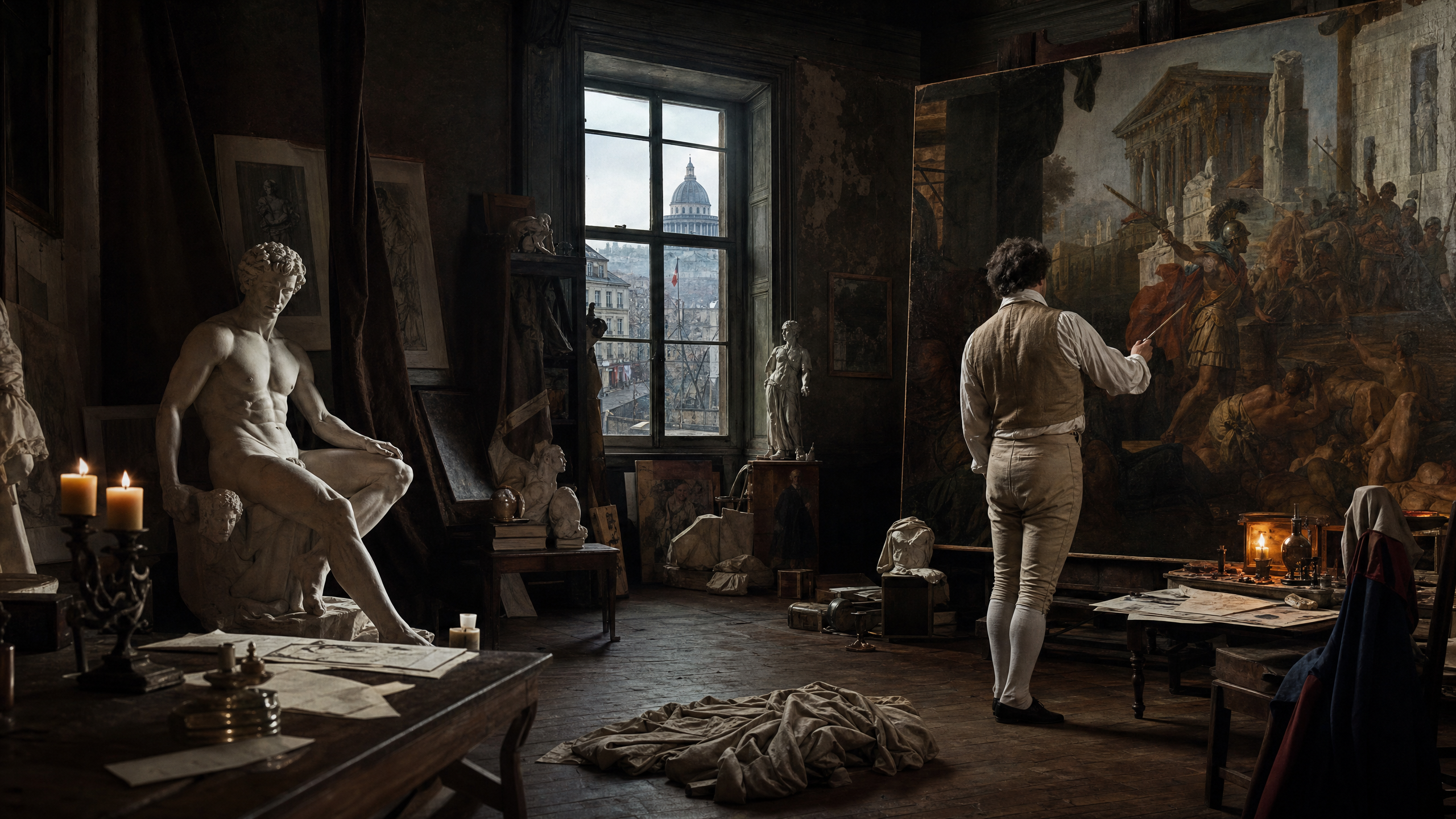
The late 18th and early 19th centuries were a period of profound upheaval and transformation across the globe. The Enlightenment, with its emphasis on reason, individual liberty, and scientific inquiry, laid the intellectual groundwork for revolutionary change. This era witnessed the American Revolution (1775–1783) and the French Revolution (1789–1799), which fundamentally reshaped political landscapes and challenged traditional monarchical and aristocratic power structures. The rise and fall of Napoleon Bonaparte (1769–1821) further destabilized Europe, leading to widespread wars and the redrawing of national borders. These tumultuous events fostered a desire for order and civic virtue, which found expression in Neoclassicism, while simultaneously igniting a fervent appreciation for emotion, individualism, and the sublime in nature, characteristic of Romanticism. The establishment of public museums, such as the Louvre by Napoleon, democratized art, making it accessible to a broader audience and shifting patronage from solely the church and aristocracy to the state and the burgeoning middle class.
Artistic Character
Neoclassicism and Romanticism, though often seen as opposing forces, both emerged from the intellectual and social ferment of the late 18th and early 19th centuries. Neoclassicism, a reaction against the perceived frivolity of the Rococo, championed classical ideals of harmony, order, and civic virtue, drawing inspiration from ancient Greek and Roman art and philosophy. Neoclassical paintings featured clean lines, sculptural forms, and a smooth, polished surface with invisible brushstrokes, often depicting heroic narratives and moral exemplars. In contrast, Romanticism emphasized emotion, individualism, the power of nature, and the exotic. Romantic artists employed visible, often dramatic brushstrokes, bold colors, and dynamic compositions to convey intense feelings and explore themes of human struggle, the sublime, and the mysterious. While Neoclassicism sought to impose rational order, Romanticism embraced the untamed and the passionate, reflecting the era's turbulent political and social changes.
Key Artists
The painters & sculptors
Art meets history
Stories behind the works
The Painting That Stirred a Revolution
How a stark depiction of a fallen revolutionary became an enduring symbol of sacrifice and civic virtue.
The Horrors of War Unveiled
A chilling masterpiece that exposes the brutal reality of conflict, far from any heroic ideal.
Survival Against All Odds
The harrowing tale of a shipwreck, rendered with visceral emotion and unflinching realism, that shocked a nation.
Curated viewing journey
Where to start looking
The Death of Marat
Jacques-Louis David
This iconic painting immediately immerses the viewer in the political fervor of the French Revolution and the Neoclassical ideal of heroic sacrifice. It's a powerful entry point to understand how art served as a tool for political messaging.
What to look for
Notice the stark, almost sculptural quality of Marat's body, the classical composition, and the minimal details that heighten the sense of tragedy and martyrdom. Observe how David uses light to emphasize Marat's purity and the emotional impact of the scene.
Liberty Leading the People
Eugène Delacroix
This painting is the quintessential image of Romanticism, showcasing its dramatic flair, emotional intensity, and connection to revolutionary ideals. It provides a vivid contrast to the Neoclassical style.
What to look for
Observe the dynamic composition, the vibrant colors, and the visible brushstrokes that convey movement and passion. Focus on the allegorical figure of Liberty, leading the diverse crowd, and how Delacroix uses light and shadow to create a sense of urgency and heroism.
The Fighting Temeraire
J.M.W. Turner
This masterpiece encapsulates the Romantic fascination with nature's power, the sublime, and the melancholic reflection on technological change. It offers a different facet of Romanticism, focusing on landscape and atmosphere.
What to look for
Pay attention to Turner's revolutionary use of light and color to create a dramatic sunset, symbolizing the end of an era. Notice the ghostly appearance of the old warship being towed by the small, dark tugboat, representing the transition from sail to steam and the passing of old glories.
AI-powered