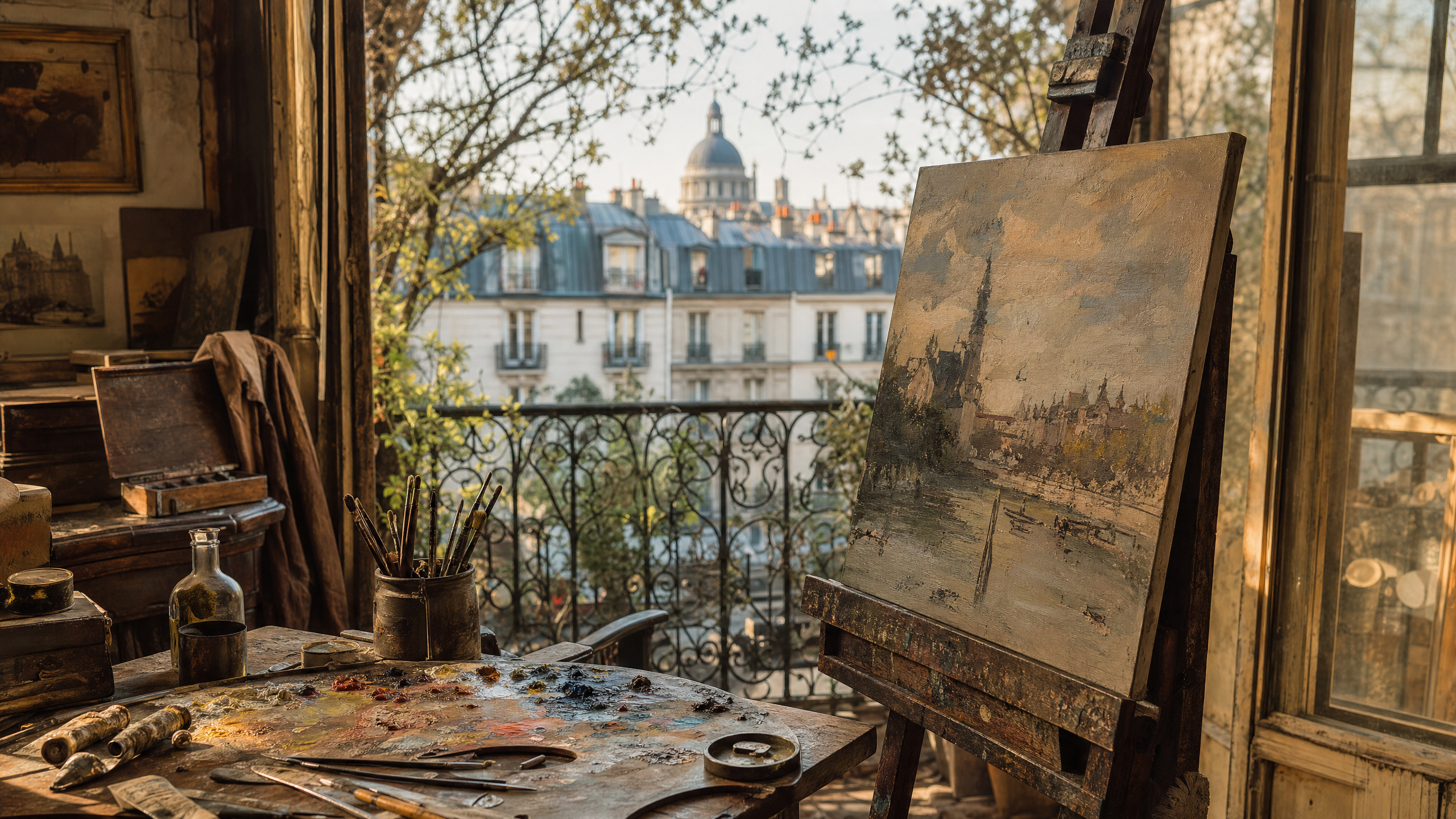
Historical Context
The world that made this art
The late 19th century, spanning 1850–1910, was a period of profound transformation across Europe, laying the groundwork for the modern world. Rapid **industrialization** reshaped societies, drawing populations from rural areas into burgeoning **urban centers** like Paris. This demographic shift led to new social structures, a growing middle class, and novel forms of leisure and entertainment. The **Franco-Prussian War (1870–71)** and the subsequent **Paris Commune** deeply impacted France, leading to significant urban reconstruction under Baron Haussmann, which created the wide boulevards and public spaces that became subjects for Impressionist painters. The **invention of photography** challenged traditional painting's role in capturing reality, pushing artists to explore subjective experience and the fleeting nature of perception. This era also saw a **radical break from academic tradition** in art, as artists, frustrated with the rigid Salon system, formed independent exhibitions. This artistic rebellion mirrored broader societal questioning of established norms and hierarchies, reflecting a desire for individual expression and a more direct engagement with contemporary life. The period was marked by a sense of accelerating change, technological advancement, and a growing awareness of the individual's place within a rapidly evolving world.
Artistic Character
The visual art of this period was defined by a radical departure from academic conventions, prioritizing the capture of **fleeting moments, light, and atmosphere**. Impressionists, like Monet, used **short, broken brushstrokes** and **pure, unblended colors** to convey the sensation of light and movement, often painting *en plein air* (outdoors) to directly observe nature. This was a stark contrast to the meticulous detail and historical narratives favored by the previous academic era. Subject matter shifted from grand historical or mythological scenes to **everyday life, landscapes, portraits, and urban scenes**, reflecting the changing modern world. Post-Impressionists, while building on Impressionist innovations in color and light, sought to imbue their work with **deeper emotional and symbolic meaning**. Artists like Van Gogh employed **expressive brushwork and bold, non-naturalistic colors** to convey inner feelings, while Cézanne focused on **structured forms and analytical composition**, laying the groundwork for Cubism. Patronage began to shift from the state and church to private collectors and art dealers, allowing for greater artistic freedom and experimentation.
Key Artists
The painters & sculptors
Art meets history
Stories behind the works
The Painting That Named a Revolution
A hazy morning scene in Le Havre accidentally sparked one of art history's most radical movements.
A Starry Night from the Asylum Window
From the confines of a mental asylum, a troubled artist painted one of humanity's most enduring visions of hope and despair.
Behind the Scenes of Belle Époque Ballet
Edgar Degas captured the unseen world of Parisian ballerinas, revealing the rigorous discipline and social realities behind the glamour.
Curated viewing journey
Where to start looking
Impression, Sunrise
Claude Monet
This painting is the genesis of the entire Impressionist movement, offering a direct look at how the era got its name and its revolutionary approach to light.
What to look for
Notice the loose brushstrokes and how Monet captures the fleeting moment of dawn, prioritizing the impression of light and atmosphere over precise detail. Historically, consider how this challenged the academic art of the time.
The Starry Night
Vincent van Gogh
One of the most famous paintings in the world, it provides an accessible entry point into Post-Impressionism's emotional intensity and expressive use of color.
What to look for
Observe the swirling, vibrant sky and the dramatic cypress tree, reflecting Van Gogh's inner turmoil and spiritual quest. Visually, note the thick impasto and bold, non-naturalistic colors.
Mont Sainte-Victoire
Paul Cézanne
Cézanne's repeated depictions of this mountain offer a crucial bridge from Impressionism to modern art, showcasing a more structured and analytical approach.
What to look for
Look at how Cézanne breaks down the landscape into geometric forms and uses patches of color to build volume and depth, foreshadowing Cubism. Consider his methodical study of nature over time.
AI-powered