Historical Context
The world that made this art
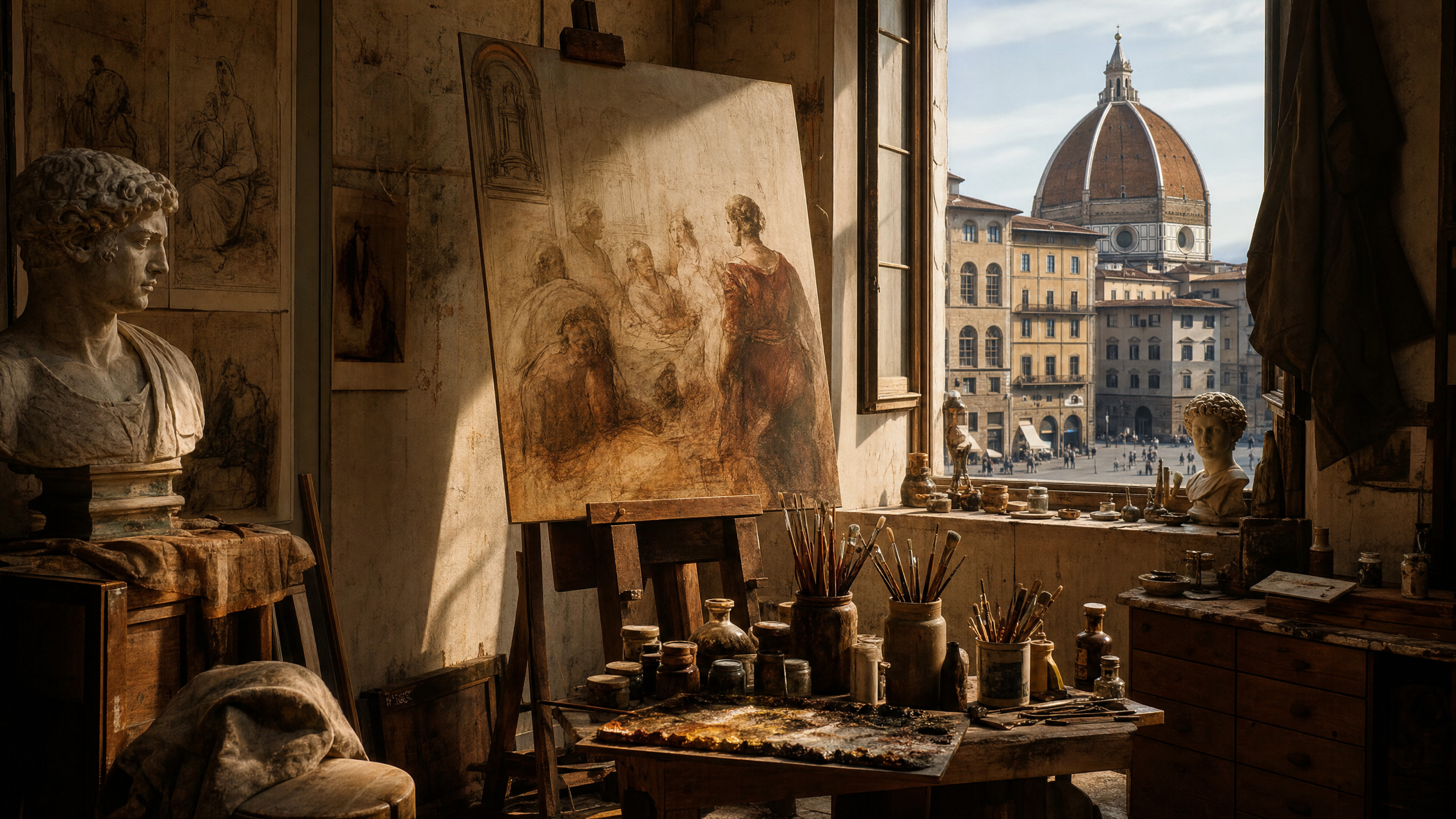
The Renaissance, spanning from the 14th to the 17th century, emerged from the ashes of the Middle Ages, driven by a fervent "rebirth" of classical learning and values from ancient Greece and Rome. This period was characterized by significant political stability and growing economic prosperity, particularly in Italian city-states like Florence, fueled by burgeoning trade. The invention of the printing press revolutionized the dissemination of knowledge, while new astronomical discoveries challenged traditional worldviews. Exploration of new continents expanded horizons, bringing both wealth and new perspectives. The Catholic Church remained a powerful patron, but wealthy individuals and civil governments increasingly commissioned art, reflecting a shift towards humanism and individualism. This backdrop of intellectual, economic, and social change directly influenced art, moving it from symbolic religious narratives to a celebration of human experience, natural beauty, and scientific observation.
Artistic Character
Renaissance art marked a profound shift from the stylized forms of the Middle Ages, embracing a new emphasis on realism, naturalism, and human emotion. Artists developed groundbreaking techniques such as linear perspective, creating the illusion of three-dimensional space on a two-dimensional surface, and chiaroscuro, the dramatic use of light and shadow to model forms. Subject matter expanded beyond purely religious themes to include classical mythology, portraiture, and scenes of daily life, reflecting the era's humanist ideals. Patronage evolved from primarily the Church to include wealthy merchant families and civil governments, fostering an environment where individual artistic genius could flourish. In Northern Europe, the development of oil painting allowed for unprecedented detail and luminosity, distinguishing it from the Italian focus on fresco and monumental sculpture.
Key Artists
The painters & sculptors
Art meets history
Stories behind the works
The Last Supper: A Moment of Betrayal Frozen in Time
Leonardo da Vinci's masterpiece captures the dramatic instant Christ reveals his impending betrayal, reflecting the intense religious and emotional climate of the late 15th century.
Sistine Chapel Ceiling: A Divine Narrative Unveiled
Michelangelo's monumental fresco cycle transformed the Sistine Chapel into a breathtaking testament to divine creation and human potential.
The Birth of Venus: A Pagan Goddess Reborn in Christian Italy
Botticelli's iconic depiction of Venus emerging from the sea symbolizes the Renaissance's bold embrace of classical mythology and humanist ideals.
Curated viewing journey
Where to start looking
The Arnolfini Portrait
Jan van Eyck
This Northern Renaissance masterpiece offers an accessible entry point due to its relatable domestic setting and astonishing realism, showcasing the meticulous detail possible with early oil painting.
What to look for
Notice the incredible detail in the textures of the fabrics, the reflection in the convex mirror, and the artist's signature above it. Observe the symbolism embedded in everyday objects, such as the dog, the single candle, and the fruit, which reveal insights into 15th-century life and beliefs.
The Birth of Venus
Sandro Botticelli
This iconic Italian Renaissance painting introduces the era's fascination with classical mythology and the idealized human form in a visually striking and emotionally resonant way.
What to look for
Observe the graceful, almost ethereal quality of Venus and the flowing lines of the drapery. Note the classical pose of Venus, reminiscent of ancient Greek sculptures, and how the figures seem to float rather than stand firmly, reflecting a blend of classical and Gothic aesthetics. Consider the revolutionary nature of depicting a nude pagan goddess in a Christian society.
The School of Athens
Raphael Sanzio
This grand fresco epitomizes the High Renaissance's intellectual ambition, bringing together the greatest minds of classical antiquity in a harmonious and monumental composition.
What to look for
Focus on the masterful use of linear perspective, drawing your eye to the central figures of Plato and Aristotle. Identify the various philosophers and scientists, many of whom are portraits of Raphael's contemporaries (including Michelangelo and Leonardo). Appreciate how the architecture evokes classical Roman grandeur, symbolizing the rebirth of ancient wisdom.
AI-powered