Historical Context
The world that made this art
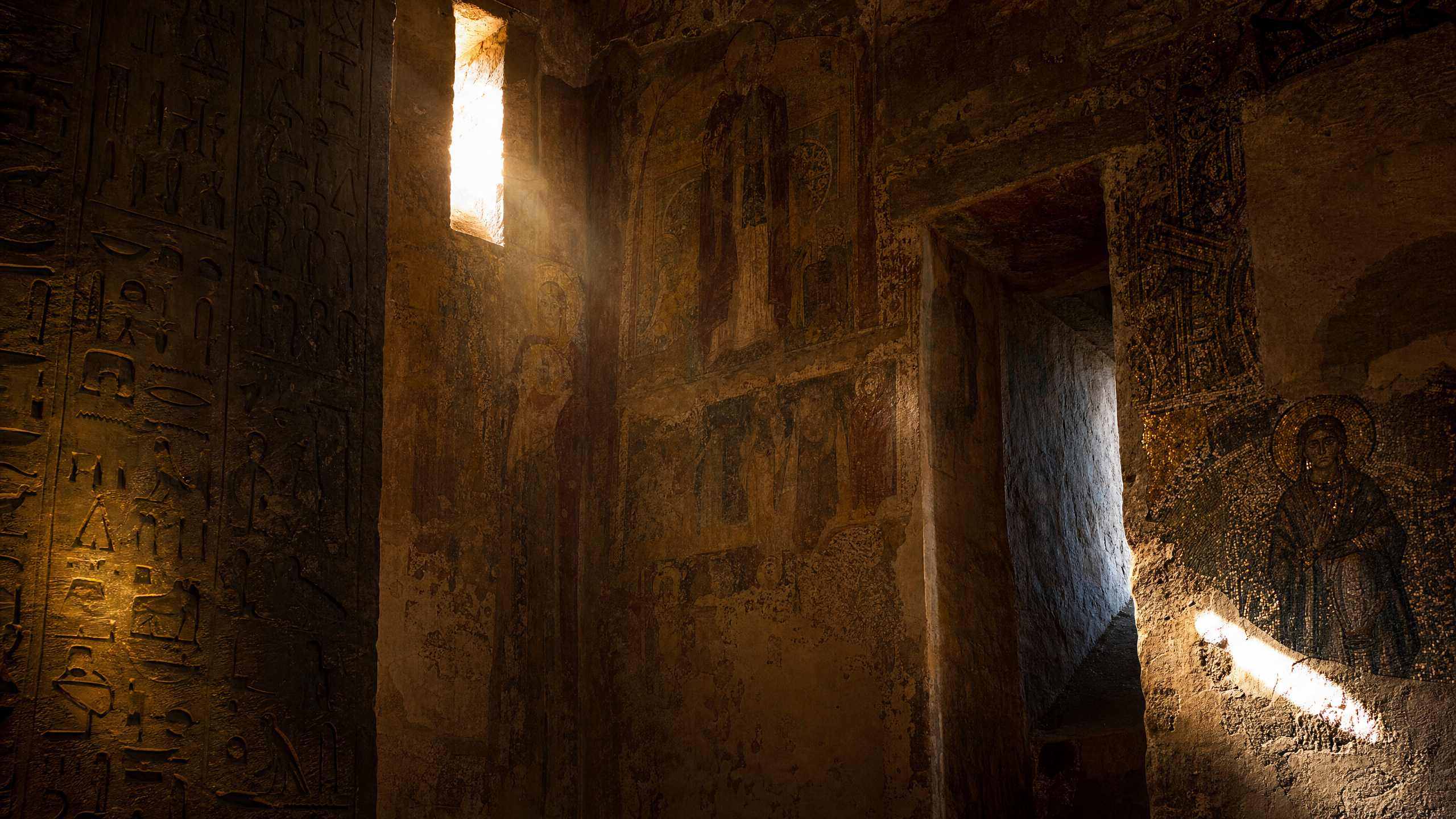
The vast span of Ancient and Medieval Art, stretching from the earliest cave paintings to the dawn of the Renaissance, is a testament to humanity's enduring need for expression amidst profound societal shifts. This era witnessed the rise and fall of empires, the birth and spread of major religions, and the constant interplay between human ingenuity and the forces of nature. In ancient Egypt, art was inextricably linked to the afterlife and the divine right of pharaohs, with monumental tombs and temples serving as eternal homes and propaganda for rulers [1]. The Greeks, in contrast, celebrated human reason and ideal forms, their art reflecting a burgeoning democracy and philosophical inquiry, even as their city-states vied for dominance [2]. Rome, a pragmatic empire, harnessed art for imperial glory, public works, and the assimilation of conquered cultures, creating a visual language of power and order that stretched across continents [2]. The collapse of the Western Roman Empire ushered in the so-called Middle Ages, a period often characterized by religious fervor, feudalism, and frequent conflict. Christianity became the dominant force, and art largely served the Church, moving from the clandestine catacomb paintings of early Christians to the awe-inspiring mosaics of Byzantium and the soaring Gothic cathedrals of medieval Europe [3]. Art became a powerful tool for religious instruction and devotion in a largely illiterate society, depicting biblical narratives and saints to inspire faith and convey theological concepts. The constant threat of invasion, plague, and political instability meant that art often emphasized spiritual salvation and divine protection, offering solace and order in a turbulent world.
Artistic Character
Ancient and Medieval art is defined by its profound connection to religion, power, and ritual, evolving dramatically over millennia. Early prehistoric art, found in caves, served ritualistic purposes, often depicting animals with striking naturalism, perhaps as part of hunting magic [1]. Egyptian art was characterized by its rigid conventions, hierarchical scale, and emphasis on permanence and the afterlife, with artists adhering to strict canons of representation for millennia [1]. Greek art, in contrast, moved towards idealized human forms, emphasizing naturalism, balance, and harmony, culminating in the Classical period with masterpieces of sculpture and architecture that celebrated human achievement and civic ideals [2]. Roman art, while influenced by Greek aesthetics, was more pragmatic and monumental, focusing on portraiture, historical narratives, and engineering marvels like aqueducts and amphitheaters, reflecting their imperial ambitions and administrative prowess [2]. With the advent of Christianity and the decline of Rome, artistic focus shifted from classical ideals to spiritual concerns. Byzantine art, with its shimmering mosaics and iconic representations, emphasized spiritual transcendence and divine majesty, often depicting figures with elongated forms and gold backgrounds to convey otherworldliness [3]. Early Medieval art saw a blend of classical, Christian, and "barbarian" influences, characterized by intricate metalwork, illuminated manuscripts with complex interlace patterns, and portable devotional objects [3]. The Romanesque period brought a resurgence of monumental stone sculpture and architecture, with churches featuring thick walls, rounded arches, and didactic carvings. Finally, Gothic art, emerging around the 12th century, pushed architectural boundaries with soaring cathedrals, stained glass windows that flooded interiors with divine light, and increasingly naturalistic sculpture, reflecting a renewed humanism and intellectual curiosity that would foreshadow the Renaissance [3].
Key Artists
The painters & sculptors
Art meets history
Stories behind the works
The Secret Sanctuary of Dura-Europos
In a hidden room, early believers defied persecution to express their faith through art.
Imperial Power and Divine Right in Mosaic
A Byzantine emperor's image, surrounded by a golden halo, asserts his God-given right to rule.
The Tapestry That Rewrote History
An epic embroidery chronicles a pivotal battle, telling the victor's story for all time.
Curated viewing journey
Where to start looking
Bust of Nefertiti
Thutmose
This iconic bust offers an immediate connection to ancient Egyptian artistry and a revolutionary moment in its history, captivating with its beauty and realism.
What to look for
Notice the striking naturalism and idealized features, a departure from earlier rigid Egyptian art. Observe the delicate modeling of the face and the intricate details of the headdress, reflecting the Amarna period's unique aesthetic.
Parthenon (sculptural program)
Pheidias (overall supervision)
The Parthenon's sculptures represent the pinnacle of Classical Greek art, embodying ideals of human perfection, democracy, and civic pride.
What to look for
Focus on the remnants of the frieze and pedimental sculptures, noting the dynamic movement, idealized human forms, and the celebration of both mythological narratives and Athenian citizens. Consider how these works conveyed the power and values of ancient Athens.
Hagia Sophia
Anthemius of Tralles and Isidorus of Miletus
This architectural marvel bridges the ancient and medieval worlds, showcasing Byzantine engineering and artistic grandeur.
What to look for
Observe the massive dome, seemingly floating, and imagine the original shimmering mosaics that would have filled its interior. Consider how the structure's scale and decoration were designed to inspire awe and convey the spiritual and imperial power of Byzantium.
AI-powered