Historical Context
The world that made this literature
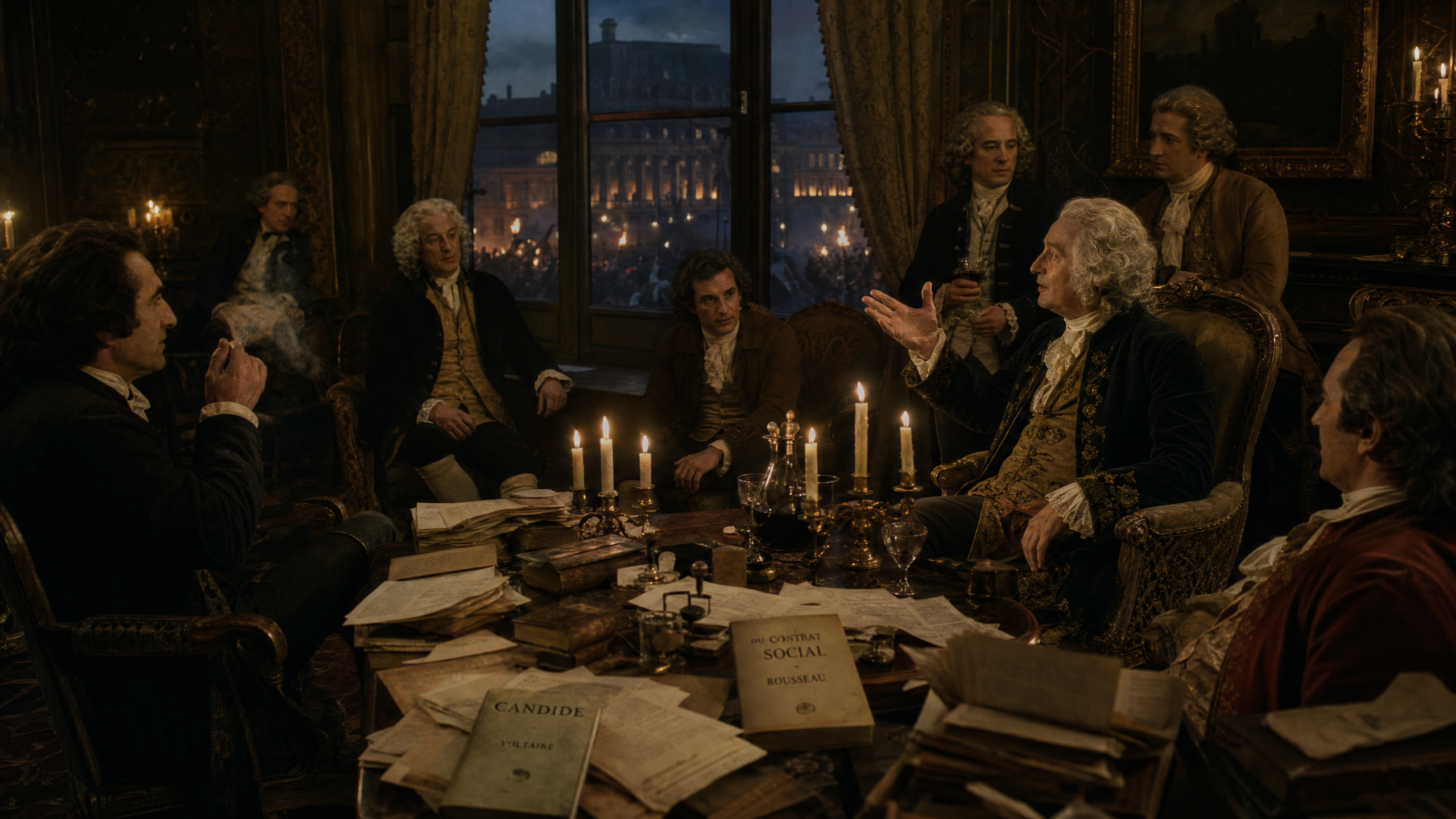
The period between 1700 and 1850 was a crucible of profound societal and intellectual transformation, marked by the intertwined yet often opposing forces of the Enlightenment and Romanticism. The Enlightenment, flourishing throughout the 18th century, championed reason, scientific inquiry, and individual liberty, directly influencing pivotal political upheavals. The American Revolution (1775-1783) and the subsequent formation of the United States, founded on Enlightenment ideals of self-governance and natural rights, provided a practical demonstration of these philosophies. This was followed by the tumultuous French Revolution (1789-1799), which, while initially inspired by Enlightenment principles of equality and fraternity, descended into radicalism and violence, profoundly impacting European thought and literature. Concurrently, the Industrial Revolution, beginning in the late 18th century and accelerating into the 19th, reshaped economies and societies, leading to urbanization, new class structures, and often harsh living conditions that fueled both social critique and a nostalgic yearning for nature. These events collectively fostered a growing impulse towards revolution, radicalism, and a critical re-evaluation of absolute monarchy and existing social orders.
Literary Character
Enlightenment literature, often termed Neoclassical, was characterized by its emphasis on reason, order, and clarity. Writers frequently employed satire to critique societal norms, political corruption, and religious dogma, aiming to improve humanity through rational discourse. Genres like the essay, novel, and philosophical treatise gained prominence, often exploring universal truths and human nature through a detached, objective lens. Authors sought to instruct and entertain, valuing wit, balance, and adherence to classical forms. In stark contrast, Romantic literature, emerging in the late 18th century as a reaction against the perceived cold rationality of the Enlightenment, championed emotion, imagination, and individualism. It celebrated the sublime in nature, the mystical, and the supernatural, often exploring themes of intense personal experience, freedom, and the heroic individual. Poets, in particular, sought to express profound feelings and a deep connection to the natural world, often rejecting rigid classical structures in favor of more organic and expressive forms. This period saw a shift from collective societal concerns to the inner life of the individual, emphasizing subjectivity and the power of creative genius.
Key Authors
The writers who defined the age
Literature meets history
Stories behind the books
The Lisbon Earthquake and Philosophical Optimism
A catastrophic natural disaster shakes the foundations of philosophical belief. Could this truly be the "best of all possible worlds"?
The French Revolution's Poetic Echoes
A young poet, inspired by revolutionary fervor, dreams of a new dawn for humanity. But can ideals survive the storm of reality?
The Byronic Hero's Balkan Adventures
A charismatic, brooding poet abandons aristocratic comfort for the fight for freedom. His life becomes as dramatic as his verse.
Curated reading journey
Where to start reading
Candide
Voltaire
This satirical novella offers a sharp, accessible introduction to Enlightenment critiques of philosophical optimism and societal ills, presented with wit and dark humor.
What to look for
Notice Voltaire's use of irony and exaggeration to expose hypocrisy. Pay attention to how Candide's unwavering optimism is repeatedly challenged by harsh realities, and the subtle shift in his philosophy by the end.
Lyrical Ballads
William Wordsworth
This collection is considered the manifesto of English Romanticism, showcasing a revolutionary approach to poetry that emphasizes nature, emotion, and the common language.
What to look for
Observe how Wordsworth elevates everyday subjects and rural life, and how he explores the profound connection between humanity and the natural world. Look for themes of memory, childhood, and the power of imagination.
Faust (Part One)
Johann Wolfgang von Goethe
Goethe's masterpiece is a monumental work that encapsulates the intellectual and spiritual struggles of the era, blending Enlightenment inquiry with Romantic passion.
What to look for
Explore Faust's insatiable quest for knowledge and experience, his pact with Mephistopheles, and the tragic consequences of his desires. Notice the interplay between reason and emotion, and the exploration of good and evil.
AI-powered