The French Revolution's Poetic Echoes
A young poet, inspired by revolutionary fervor, dreams of a new dawn for humanity. But can ideals survive the storm of reality?
Historical Context
The French Revolution (late 18th century)
The Story
William Wordsworth, a passionate young man, traveled to France in the early years of the French Revolution, witnessing firsthand the initial intoxicating promise of liberty, equality, and fraternity. He was deeply moved by the revolutionary spirit, believing it heralded a new era for mankind. This profound experience, and his subsequent disillusionment as the Revolution descended into the Reign of Terror and Napoleonic despotism, became a central theme in his autobiographical epic, *The Prelude*. Wordsworth grappled with the tension between revolutionary ideals and their violent corruption, exploring how political events shape individual consciousness and the search for enduring values. His poetry reflects a shift from external political hope to an internal, spiritual quest, finding solace and moral guidance in the restorative power of nature, a hallmark of the Romantic movement.
Deep Dive Essay
The full historical picture
The French Revolution's Poetic Echoes: When Idealism Met Iron
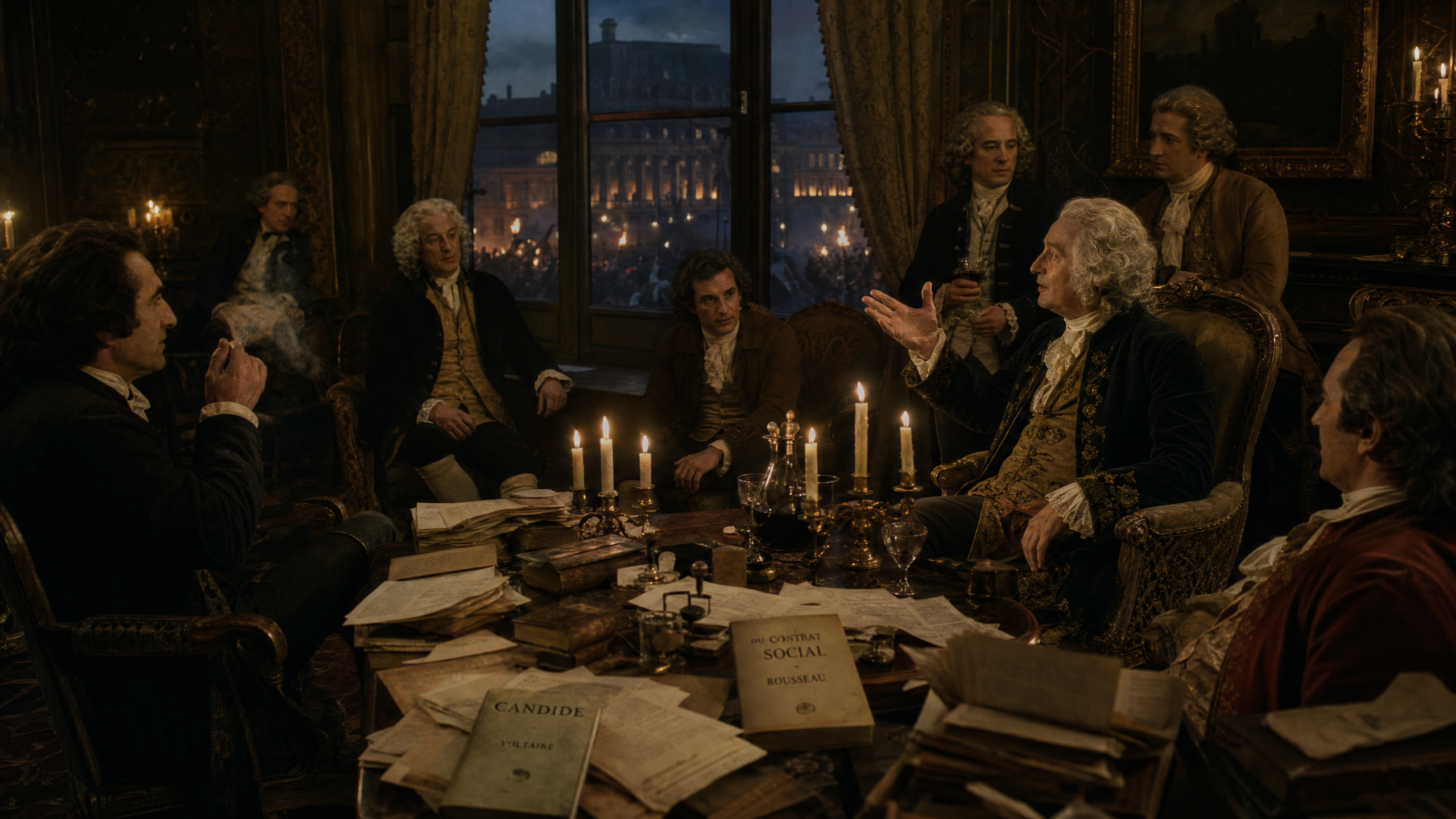
The late 18th century was a powder keg, a time when the old world order, with its kings and aristocrats, felt increasingly brittle. Across the Atlantic, the American colonies had thrown off British rule, sparking ideas of self-governance and individual rights. But it was in France, in 1789, that the true earthquake struck. The storming of the Bastille wasn't just a prison break; it was a symbolic shattering of absolute monarchy, igniting a fervent belief that humanity could, through reason and collective will, forge a better society. Concepts like liberty, equality, and fraternity weren't just slogans; they were revolutionary ideals that promised a new dawn, a world free from tyranny and injustice. Europe watched, mesmerized and terrified, as the French experiment unfolded, believing that the future of civilization itself hung in the balance.
Amidst this seismic upheaval, a young English poet named William Wordsworth found himself drawn to France like a moth to a flame. It was 1791, and the initial fervor of the Revolution was still intoxicating. Wordsworth, then in his early twenties, was a passionate idealist, deeply sensitive to human suffering and injustice. He saw in the French Revolution not just a political event, but a spiritual awakening, a testament to humanity's inherent goodness and its capacity for radical change. He lived among the revolutionaries, breathed their air, and for a time, believed he was witnessing the birth of a utopian age. This profound, transformative experience, etched onto his very soul, became the central, sprawling canvas for his epic autobiographical poem, The Prelude.
The Prelude, subtitled "Growth of a Poet's Mind," is unlike any poem that came before it. It's not a narrative of heroic deeds or mythical journeys, but an inward exploration of the self, a tracing of the forces that shaped one man's consciousness. Wordsworth wrote it over many years, constantly revising, attempting to understand how his youthful optimism for the Revolution curdled into profound disillusionment as the Reign of Terror devoured its own children and Napoleon Bonaparte rose to power, betraying the very ideals he claimed to uphold. The poem becomes a poignant record of a soul grappling with shattered hopes, a testament to the brutal reality that even the noblest intentions can pave the road to hell. It's a deeply personal journey, yet it speaks to a universal human experience of idealism confronting harsh reality.
Wordsworth's struggle in The Prelude resonates deeply even today. It reminds us that grand political movements are not abstract forces but are experienced, often painfully, by individuals. It shows us how events on the world stage can profoundly shape our inner lives, forcing us to re-evaluate our beliefs and find new sources of meaning. For Wordsworth, that solace ultimately came not from political upheaval, but from the enduring, restorative power of nature, a characteristic turn towards the internal and spiritual that defines the Romantic movement. His poem is a powerful reminder that while external revolutions may fail, the quest for truth, beauty, and moral guidance continues, often found in the quiet contemplation of the self and the natural world.
Continue exploring
Back to Enlightenment & Romantic Literature