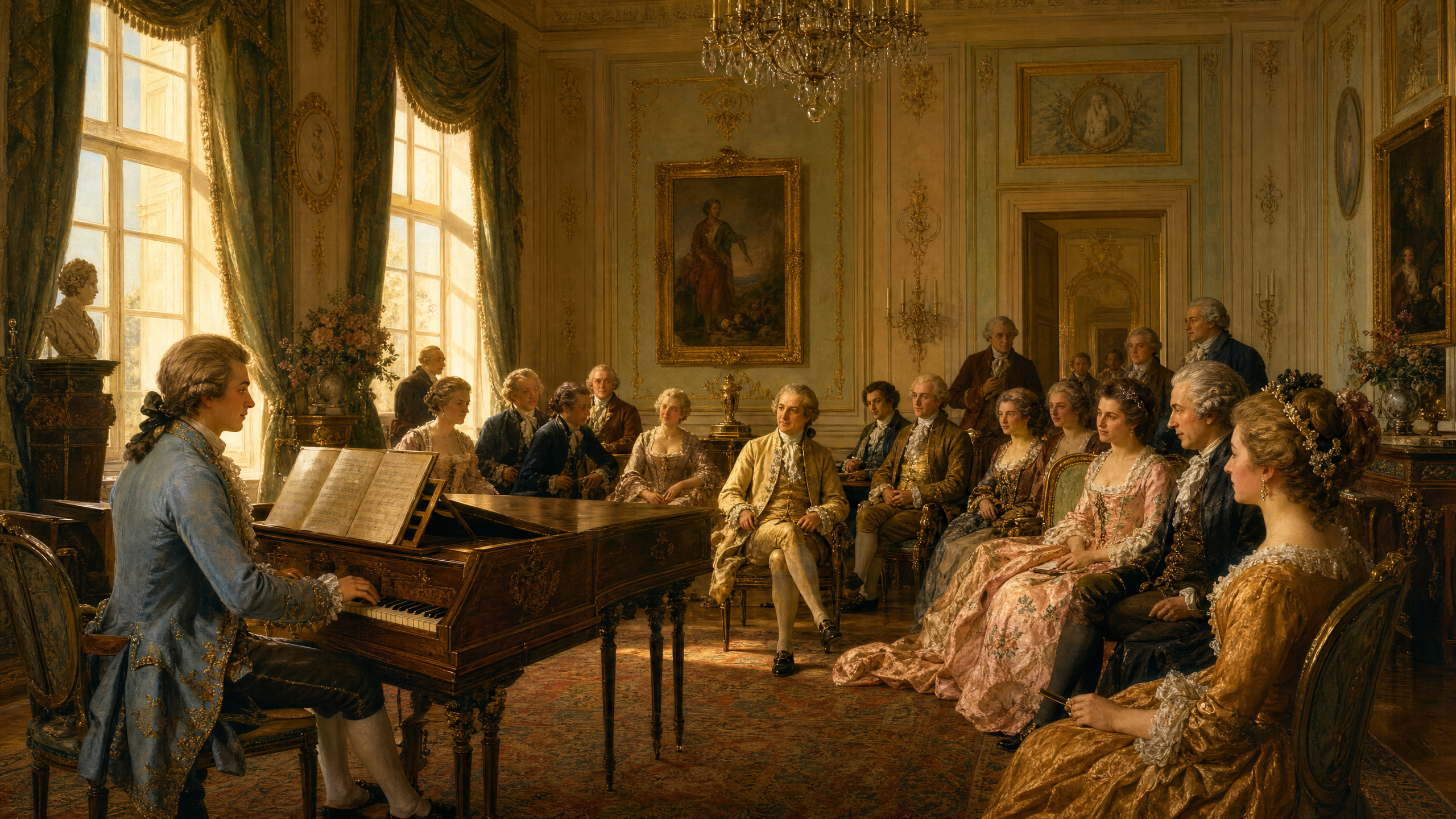
Mozart's Revolutionary Marriage
A comedic opera that dared to satirize the aristocracy and champion the cleverness of commoners, sparking controversy just three years before the French Revolution.
Historical Context
The eve of the French Revolution, with growing social unrest and criticism of aristocratic privilege.
The Story
Premiering in 1786, just three years before the French Revolution, Mozart's opera 'The Marriage of Figaro' was based on a play by Beaumarchais that had been banned for its subversive themes. The opera cleverly depicts servants outwitting their aristocratic masters, a narrative that resonated deeply with the Enlightenment's questioning of social hierarchies. Despite initial censorship challenges, its wit, humanity, and brilliant music made it an instant success, reflecting the era's shifting social dynamics and the burgeoning desire for equality.
Deep Dive Essay
The full historical picture
The Piece
The Marriage of Figaro
Wolfgang Amadeus Mozart
THE & CO. SERIES
See Also in This Era
The same historical moment, seen through different creative lenses.
Pablo & Co.
Visual Art
David's Oath of the Horatii and Canova's sculptures expressed the same Enlightenment ideals as Haydn and Mozart.
Explore this era →
Ernest & Co.
Literature
Voltaire, Rousseau, and Goethe were the intellectual companions of Mozart and Haydn in the Age of Reason.
Explore this era →
Coco & Co.
Fashion
The shift from Rococo excess to Neoclassical simplicity in dress mirrored the clarity and balance of Classical music.
Explore this era →
Continue exploring
Back to Classical Era