Historical Context
The world that shaped this fashion
The period from 1860 to 1940 was a crucible of change, profoundly shaping fashion. The late 19th century Belle Époque, marked by relative peace and prosperity, saw the rise of haute couture under figures like Charles Frederick Worth, catering to an elite class enjoying industrial wealth. The burgeoning women's suffrage movement and increasing female participation in public life began to challenge restrictive corsetry. World War I (1914-1918) dramatically altered women's roles, pushing them into the workforce and necessitating practical attire, leading to simpler silhouettes and shorter hemlines. The Roaring Twenties, fueled by post-war exuberance and economic boom, embraced the flapper aesthetic—a rejection of Victorian constraints. The Art Deco movement influenced geometric patterns and sleek designs. The Great Depression (1929 onwards) brought austerity, but also a continued emphasis on streamlined, functional fashion, with designers like Schiaparelli and Vionnet innovating with new cuts and materials, reflecting a world grappling with economic hardship and the dawn of mass media.
Fashion Character
Fashion in this era evolved from the rigid, corseted silhouettes of the late 19th century, characterized by bustles and elaborate ornamentation, to the fluid, liberated forms of the 1930s. Early designs emphasized an 'S-bend' silhouette, achieved through tight lacing, signifying status and feminine ideals. The turn of the century saw a gradual loosening, with Paul Poiret championing the uncorseted figure and orientalist influences. Post-WWI, the 'flapper' style emerged, featuring dropped waists, shorter skirts, and boyish figures, symbolizing newfound freedom and rebellion. Fabrics shifted from heavy silks and velvets to lighter crepes, chiffons, and jersey, facilitating movement. Colors became bolder and more varied. Construction moved from bespoke, intricate tailoring to more streamlined, ready-to-wear approaches, democratizing fashion and reflecting a modern, active woman. The bias cut, pioneered by Madeleine Vionnet, allowed fabric to drape sensuously, emphasizing natural curves rather than artificial structures, communicating elegance and a subtle power.
Key Figures
The designers who defined the age
Fashion meets history
Stories behind the garments
The Corset's Last Stand and Liberation
From the rigid 'S-bend' to its eventual abandonment, the corset's journey reflects a century of changing ideals about women's bodies and freedom.
Flappers and the Jazz Age Revolution
The iconic flapper, with her bobbed hair and dropped-waist dress, embodied the rebellious spirit and newfound freedoms of the Roaring Twenties.
Art Deco's Geometric Glamour
The sleek lines and geometric patterns of Art Deco permeated fashion, transforming garments into wearable works of modern art.
Curated style journey
Where to start looking
The 'S-bend' Corset and Belle Époque Gowns
Charles Frederick Worth and other couturiers
This silhouette defines the opulent, restrictive fashion that dominated the late 19th century, setting the stage for subsequent liberation.
What to look for
Notice the extreme curve of the back, the pushed-forward bust, and the elaborate embellishments like lace, ruffles, and embroidery that adorned these grand gowns, signifying wealth and strict social codes.
Paul Poiret's Uncorseted Designs
Paul Poiret
Poiret's revolutionary designs mark a pivotal shift towards freeing the female form from corsetry, introducing fluid, exotic silhouettes.
What to look for
Observe the absence of a corset, the high-waisted, flowing lines, and the vibrant, often oriental-inspired colors and patterns. Look for his iconic 'lampshade' tunics and draped fabrics that allowed for unprecedented movement.
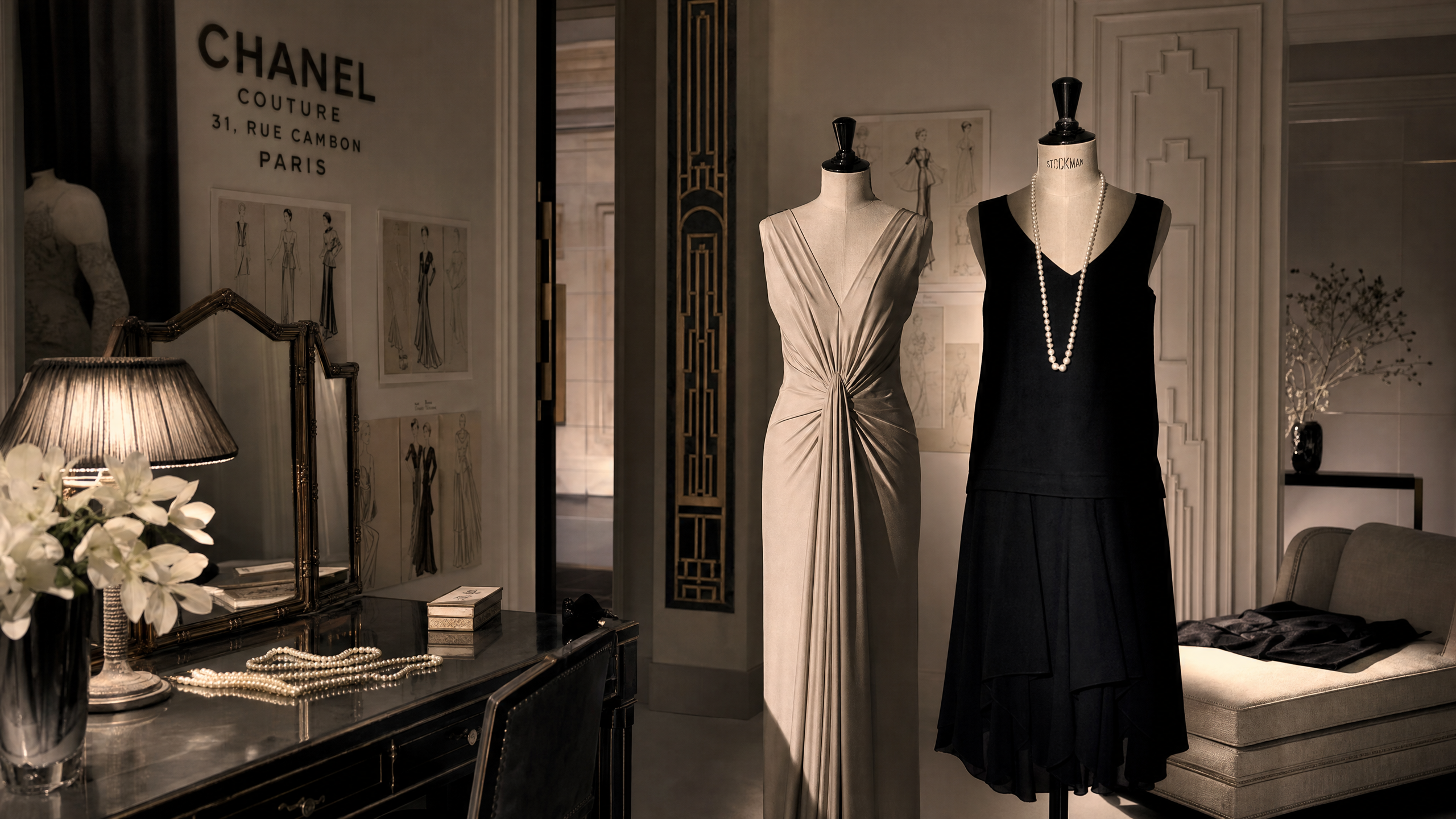
Coco Chanel's Little Black Dress
Coco Chanel
The 'little black dress' epitomizes the modernist shift towards simplicity, functionality, and timeless elegance that defined the 1920s and beyond.
What to look for
Focus on the clean lines, the use of jersey or other comfortable fabrics, and the minimalist aesthetic. Notice how it could be dressed up or down, reflecting the versatility and practicality that became hallmarks of modern fashion.
AI-powered