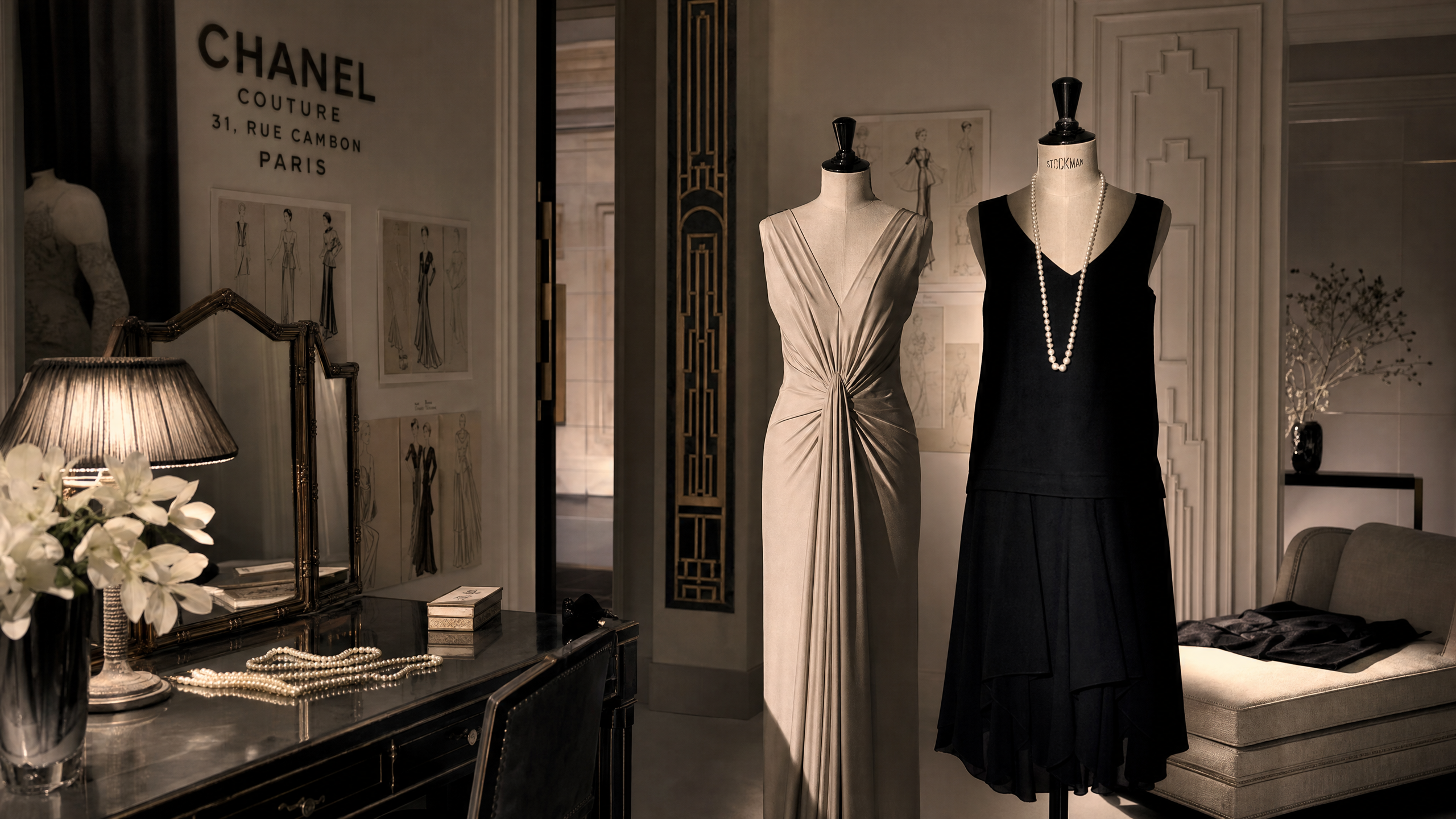
The Corset's Last Stand and Liberation
From the rigid 'S-bend' to its eventual abandonment, the corset's journey reflects a century of changing ideals about women's bodies and freedom.
Historical Context
Women's suffrage movement, World War I, changing social roles
The Story
In the late 19th century, the corset was a symbol of feminine beauty and social status, creating the dramatic 'S-bend' silhouette. However, as women gained more public roles and the suffrage movement grew, the restrictive nature of the corset became a point of contention. Designers like Paul Poiret began to offer alternatives, promoting uncorseted, flowing garments. World War I proved to be the final blow, as women entered factories and fields, requiring practical, unrestrictive clothing. The corset, once a fashion staple, became a relic of a bygone era, replaced by brassieres and girdles that offered support without the severe constriction, symbolizing a profound shift in women's independence and body image.
Deep Dive Essay
The full historical picture
The Corset's Last Stand and Liberation
The World at the Time
Imagine the turn of the 20th century, a time of grand paradox. In the glittering salons of Paris and the bustling streets of London, the Belle Époque was in full swing, a period of unprecedented peace and prosperity. Yet, beneath the surface of opulence, seismic shifts were rumbling. Women, long confined to the domestic sphere, were beginning to demand a voice, a vote, and a life beyond the drawing room. The suffrage movement, gaining momentum across Europe and America, challenged centuries of patriarchal norms. Think of the determined Emmeline Pankhurst in England, leading marches and enduring imprisonment for the cause. This was a world on the cusp of radical change, where the rigid structures of society were starting to buckle under the weight of new ideas and aspirations.
Then came World War I in 1914, a cataclysm that shattered the old order. As men marched off to the trenches, women stepped into factories, hospitals, and fields, keeping nations running. They drove ambulances, operated machinery, and tilled the land, proving their capabilities in ways that could no longer be ignored. This wasn't just about patriotism; it was about practical necessity, and it irrevocably altered women's roles and their perception of themselves. The world was hurtling towards modernity, and fashion, ever a mirror of society, was about to undergo its own revolution.
The Designer and the Work
Here, our "designer" isn't a single person but a confluence of forces: the various designers who dared to dream beyond the confines of whalebone, and the powerful social movements that provided the impetus for change. For centuries, the corset had been an unyielding architectural marvel, shaping women into idealized silhouettes. By the late 19th century, it created the dramatic "S-bend," pushing the bust forward and the derriere back, a silhouette both admired and deeply restrictive. It was a symbol of feminine beauty, certainly, but also of a woman’s limited sphere, her body literally molded to societal expectations.
Then came figures like Paul Poiret in the early 1900s. He wasn't the first to question the corset, but he was perhaps the most influential in offering a viable, glamorous alternative. Poiret, with his oriental-inspired designs and flowing, uncorseted gowns, declared war on the "tyranny of the corset." His designs, often featuring high waists and draped fabrics, liberated the female form, allowing for movement and a more natural shape. This wasn't just about aesthetics; it was about comfort and freedom. The evolution and eventual decline of the corset was a gradual process, but Poiret's vision, coupled with the burgeoning women's rights movement, laid the groundwork for its eventual demise. The final blow, however, was struck by the practical demands of wartime. A woman operating heavy machinery or tending to the wounded simply couldn't do so effectively while laced into a rigid corset. The shift from the restrictive corset to the more flexible brassieres and girdles that emerged in the 1920s wasn't just a change in undergarments; it was a profound declaration of independence.
Why It Still Matters
The story of the corset's decline is far more than a footnote in fashion history; it's a powerful narrative about women's liberation and the profound connection between clothing and societal change. It reveals how deeply ingrained societal expectations were, literally shaping women's bodies for centuries. The moment women began to shed the corset, they were shedding more than just whalebone and lacing; they were shedding the symbolic chains of a bygone era. For a modern reader, this story underscores the enduring power of fashion as a barometer of social progress. It reminds us that what we wear, and how we wear it, is never just about aesthetics. It's about identity, freedom, and the ongoing struggle for equality. The ghost of the corset still whispers in our sartorial choices, reminding us of the battles fought and won for the simple, yet revolutionary, right to move freely in our own skin.
The Garment
The evolution and eventual decline of the corset
Various designers and social movements
Continue exploring
Back to Belle Époque to Modernism