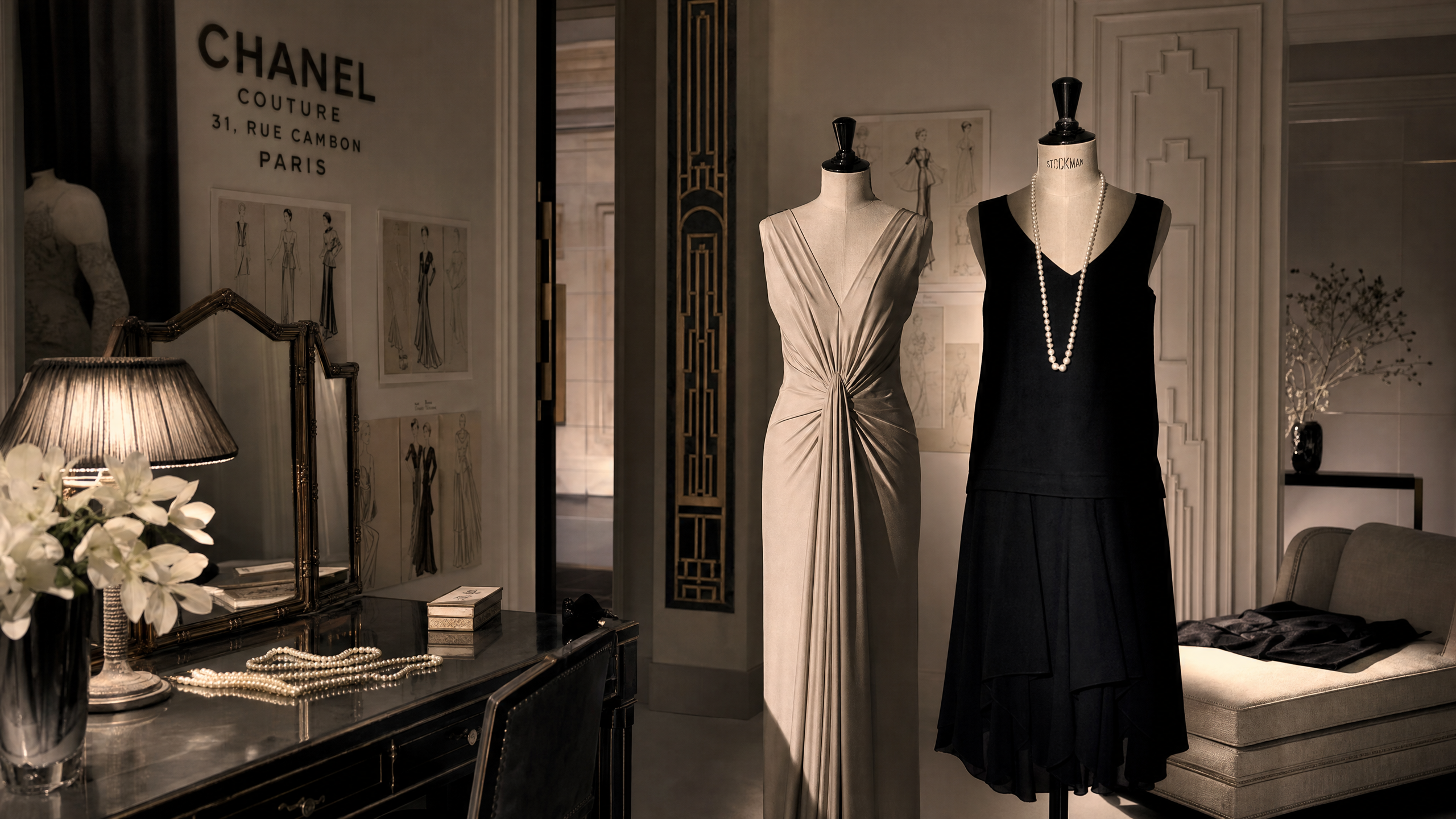
Flappers and the Jazz Age Revolution
The iconic flapper, with her bobbed hair and dropped-waist dress, embodied the rebellious spirit and newfound freedoms of the Roaring Twenties.
Historical Context
Post-World War I economic boom, women's suffrage, rise of jazz music
The Story
Following the devastation of World War I, the 1920s ushered in an era of unprecedented social and cultural change, known as the Jazz Age. Women, having contributed significantly to the war effort, sought greater independence and expression. The flapper became the emblem of this new woman: she cut her hair short, wore shorter, dropped-waist dresses that allowed for dancing, and embraced a more active, liberated lifestyle. Designers like Coco Chanel provided the perfect wardrobe—simple, comfortable, and chic jersey dresses. This fashion was a direct rejection of Victorian prudery and a celebration of modernity, reflecting the economic prosperity, the rise of jazz music, and the burgeoning women's rights movement that defined the decade.
Deep Dive Essay
The full historical picture
The Roaring Twenties: When Skirts Got Short and Spirits Soared
Imagine a world reeling from the Great War, a conflict that had shattered old certainties and claimed millions of lives. It was 1918, and Europe, particularly France, was a landscape of grief and rebuilding. Yet, from the ashes of destruction, a vibrant new spirit began to emerge. The Belle Époque's corseted elegance and strict social codes felt utterly out of step with a generation that had witnessed unimaginable horrors and yearned for freedom. Women, who had stepped into factories and taken on traditionally male roles during the war, were no longer content to retreat into domesticity. They had tasted independence, and they wanted more. This was the dawn of the Jazz Age, a decade of unprecedented economic boom, technological innovation, and a fervent desire to live life to the fullest. In the United States, the 19th Amendment in 1920 granted women the right to vote, a powerful symbol of their growing agency. Across the Atlantic and in America, the infectious rhythms of jazz music, born from African American communities, filled speakeasies and dance halls, providing the soundtrack to a revolution in manners and morals.
The Flapper: A Silhouette of Liberation
Into this exhilarating new world stepped a new kind of woman: the flapper. Her look was a radical departure from anything seen before. Gone were the restrictive corsets, the voluminous skirts, and the elaborate coiffures of the Victorian and Edwardian eras. The flapper embraced a boyish, almost androgynous silhouette, a stark contrast to the hourglass figure previously idealized. Her hair was bobbed or shingled, often adorned with a cloche hat pulled low over her eyes. Her dresses, with their dropped waists and straight lines, skimmed the body rather than cinching it, allowing for unprecedented freedom of movement. These garments were designed for dancing, for living, for a woman who was active and engaged with the world.
Designers like Coco Chanel were at the forefront of this sartorial revolution. Chanel, a woman who had built her empire on an understanding of modern women's needs, championed simplicity, comfort, and effortless chic. She famously utilized jersey fabric, previously relegated to men's underwear, to create soft, unstructured dresses and separates that were both practical and elegant. Her designs were a direct antidote to the fussy, ornate fashions of the past. Jeanne Lanvin, another prominent designer of the era, while perhaps known for a slightly more romantic aesthetic, also embraced the looser, more comfortable lines that defined the decade. Her "robe de style," with its full skirt, offered an alternative to the straight flapper dress, but still prioritized ease of wear over rigid structure. These designers understood that fashion was no longer just about adornment; it was about empowerment. It was about creating clothes that allowed women to move, to work, to dance, and to participate fully in the vibrant life of the Jazz Age.
Echoes of Freedom
The flapper aesthetic and its associated lifestyle were more than just a fleeting trend; they were a powerful manifestation of a profound societal shift. The dropped waist dress, the bobbed hair, the freedom to dance the Charleston in public: these were symbols of women breaking free from centuries of constraint. This era reminds us that fashion is never just about fabric and thread; it is a mirror reflecting the deepest desires and aspirations of a society. The flapper's defiant spirit, her embrace of modernity, and her demand for agency continue to resonate today. Her story is a testament to the enduring power of fashion to not only reflect change but to actively drive it, proving that sometimes, the most revolutionary statements are made with a simple, comfortable dress and a daring new haircut.
The Garment
The flapper aesthetic and its associated lifestyle
Coco Chanel, Jeanne Lanvin, and others
Continue exploring
Back to Belle Époque to Modernism