Shostakovich's Symphony of War and Resistance
Composed amidst the brutal siege of Leningrad, this symphony became a powerful symbol of defiance against Nazi aggression and a testament to human endurance.
Historical Context
The Siege of Leningrad (1941–1944) during World War II, the longest siege in modern history.
The Story
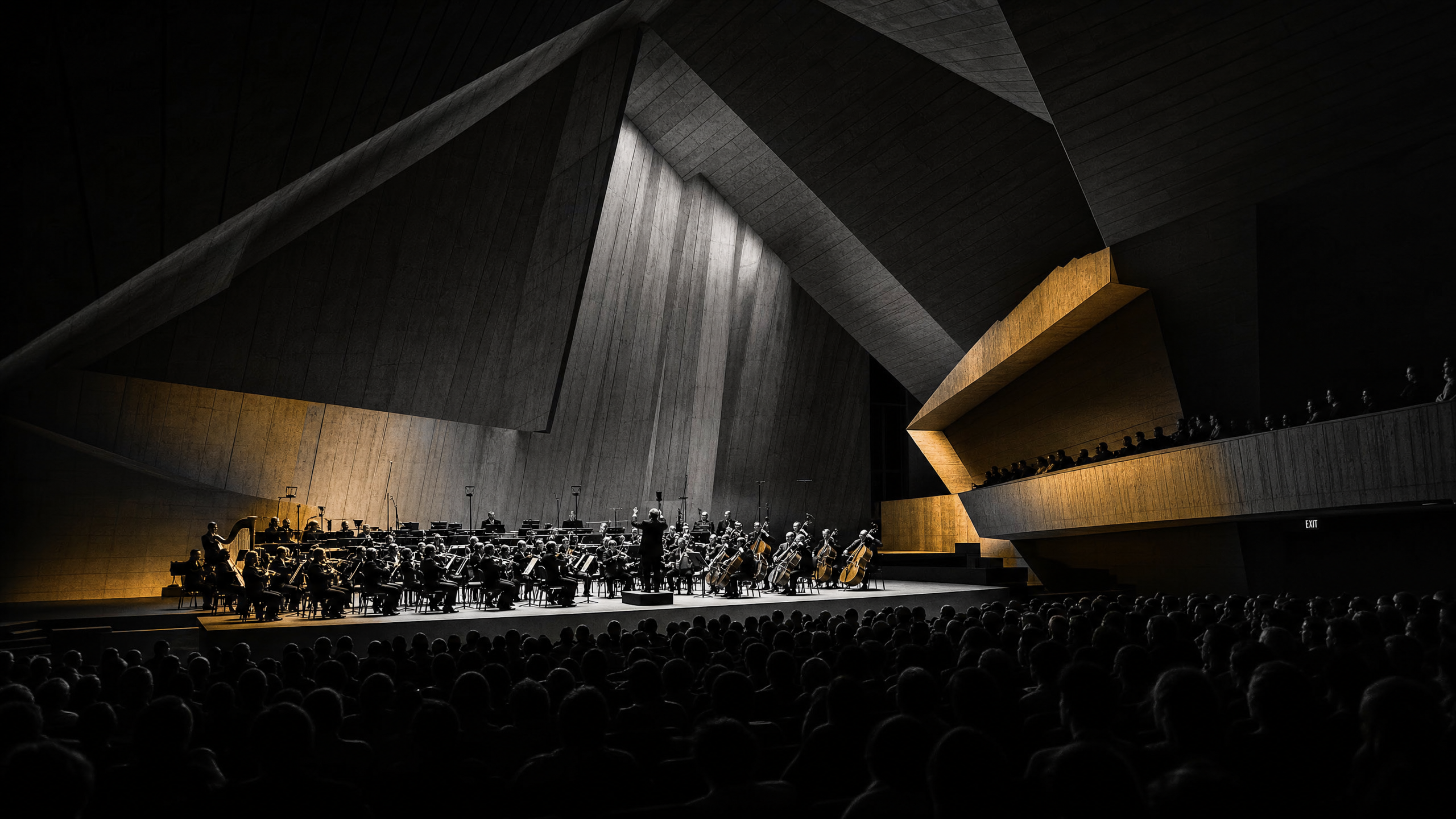
Dmitri Shostakovich composed his Seventh Symphony, 'Leningrad,' during the harrowing siege of his hometown by Nazi forces in World War II. The work's monumental scale and its infamous 'invasion theme' became a rallying cry for the Soviet people. Its performance in the starving, besieged city in August 1942, with musicians who were barely alive, broadcast on loudspeakers across the city and to the German lines, remains one of the most extraordinary stories of music's role in wartime resistance. The musicians were so weakened by starvation that some had to be brought to the performance on stretchers.
Deep Dive Essay
The full historical picture
Shostakovich's Symphony of War and Resistance
The summer of 1941 saw Europe ablaze, its heart consumed by the inferno of World War II. On June 22, Nazi Germany launched Operation Barbarossa, a massive invasion of the Soviet Union, shattering the fragile non-aggression pact between the two powers. The German war machine, honed by years of conquest, swept eastward with terrifying speed. By September 8, the ancient, majestic city of Leningrad, once the imperial capital of St. Petersburg, found itself encircled. The siege had begun, a brutal blockade that would last for an agonizing 872 days, claiming over a million lives through starvation, disease, and relentless bombardment. This was not merely a military campaign; it was an ideological war, a clash of civilizations, with Leningrad, a symbol of Soviet resilience and culture, at its epicentre. The world watched, horrified, as a modern metropolis was systematically choked, its people reduced to unimaginable suffering.
Amidst this apocalyptic backdrop, Dmitri Shostakovich, then a celebrated but often politically embattled composer, found himself trapped in his besieged hometown. He was 35 years old, a figure of immense talent and complex character, known for his powerful, often sardonic, musical voice. He had already faced the chilling disapproval of Stalin's regime, narrowly escaping the purges of the 1930s. But now, a new, external enemy threatened his city and his people. Driven by a profound sense of duty and artistic compulsion, Shostakovich began composing his Symphony No. 7, 'Leningrad,' a monumental work that would become synonymous with the city's heroic struggle. He initially worked as a fire warden, watching the bombs fall, before being evacuated, but the music he conceived was already deeply rooted in the city's agony.
The symphony itself is a vast, four-movement epic, perhaps most famous for its first movement's "invasion theme." This deceptively simple, almost childlike melody begins softly, played by a solo clarinet, then repeats, growing inexorably louder and more menacing with each iteration, layered with new instruments and increasingly dissonant harmonies. It's a musical depiction of an approaching, unstoppable force, a chilling sonic representation of the Nazi war machine. The sheer scale of the work, its dramatic sweep, and its moments of both profound sorrow and defiant triumph, captured the spirit of a nation under siege. Shostakovich poured the terror, the grief, and the unyielding spirit of Leningrad into every note, creating a musical testament to human endurance.
The August 1942 performance of the 'Leningrad' Symphony in the starving city is one of history's most poignant and powerful cultural acts. Musicians, many of them skeletal and weak, some so frail they had to be carried to the concert hall, played with a courage that transcended their physical suffering. The music, amplified by loudspeakers, not only filled the city's ravaged streets but also reached the German lines, a defiant roar of resistance. This symphony, born of unimaginable hardship, continues to resonate today as a testament to the human spirit's capacity for creation and defiance in the face of annihilation. It reminds us that art is not a luxury, but often a vital lifeline, a source of hope and identity, especially when the world seems to have lost all reason. The 'Leningrad' Symphony is a stark reminder of the cost of war and the enduring power of music to articulate the unspeakable.
The Piece
Symphony No. 7, 'Leningrad'
Dmitri Shostakovich
Continue exploring
Back to Modern & 20th Century