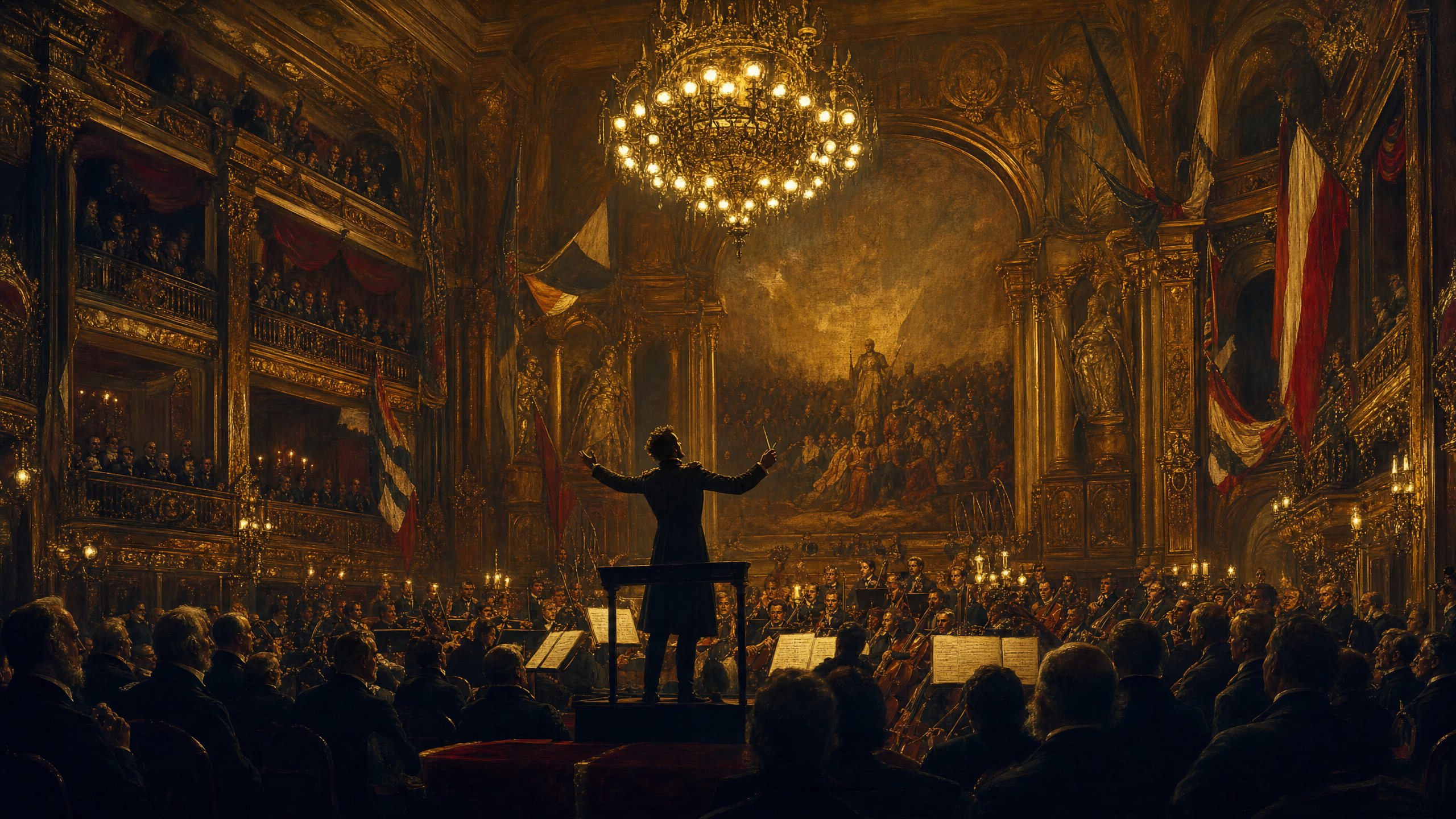
1850–1910
Late Romantic & Nationalist
The age of empire, national awakening, and the search for musical identity, as composers across Europe turned to their folk traditions to forge new voices.
Composers
4
Stories
3
Listening Journey
4 pieces
The World
Historical Context
The late 19th century was defined by the height of European imperialism, the consolidation of nation-states, and growing nationalist movements across Eastern Europe and Scandinavia. The Austro-Hungarian Empire, the Russian Empire, and the Ottoman Empire were all under pressure from within. This era also saw rapid industrialization, the rise of the middle class, and a growing sense of cultural anxiety as traditional ways of life were transformed.
The Sound
What to Expect
Late Romantic music pushed the boundaries of harmony and orchestral scale to their limits, with composers like Mahler writing symphonies of enormous length and emotional scope. Nationalist composers drew on folk melodies, dances, and legends to create distinctly non-German musical languages. The music ranges from the intimate and lyrical to the vast and overwhelming, always deeply personal and often explicitly connected to landscape, history, or national identity.
The Masters
Key Composers
History through music
Stories of the Age
Finlandia: The Symphony That Threatened an Empire
A piece of music so politically dangerous that an empire banned it. Jean Sibelius wrote a seven-minute tone poem that became the sound of a nation's defiance.
Jean Sibelius
Finlandia
Dvořák in America: Finding Home in a Strange Land
What happens when Europe's most celebrated nationalist composer travels to America and discovers that the music of enslaved people and indigenous nations echoes his own folk traditions? A masterpiece is born.
Antonín Dvořák
Symphony No. 9, 'From the New World'
Mahler's Farewell: Music at the End of a World
Gustav Mahler's final completed symphony was his farewell to a world he sensed was ending. Written in the shadow of personal tragedy and historical foreboding, it would prove prophetic.
Gustav Mahler
Symphony No. 9
Start here
Your Listening Journey
A curated sequence of pieces to guide you through this era, from the most accessible entry point to deeper explorations.
Finlandia
Jean Sibelius
Why start here
This powerful symphonic poem is an accessible and emotionally charged entry point into the era's nationalist fervor, instantly conveying a sense of struggle and triumph.
What to listen for
Pay attention to the dramatic contrasts between the turbulent, defiant sections and the soaring, hymn-like melody that emerges as a symbol of hope.
Symphony No. 9, 'From the New World'
Antonín Dvořák
Why start here
Dvořák's most famous symphony beautifully blends European Romanticism with American folk influences, offering a rich tapestry of melodies and emotions.
What to listen for
Listen for the memorable themes, particularly in the second movement (Largo), and how Dvořák integrates folk elements into a classical form.
Swan Lake Suite
Pyotr Ilyich Tchaikovsky
Why start here
The most beloved ballet music ever written, combining Russian folk elements with Western Romantic lyricism to create something utterly unique.
What to listen for
Notice the contrast between the tender, yearning 'Swan Theme' and the more dramatic, turbulent passages.
Symphony No. 5, Adagietto
Gustav Mahler
Why start here
This deeply emotional and lyrical movement offers a poignant glimpse into Mahler's inner world, representing the era's profound introspection.
What to listen for
Immerse yourself in the tender, flowing melody primarily carried by strings and harp, and appreciate its delicate beauty and profound sense of longing.