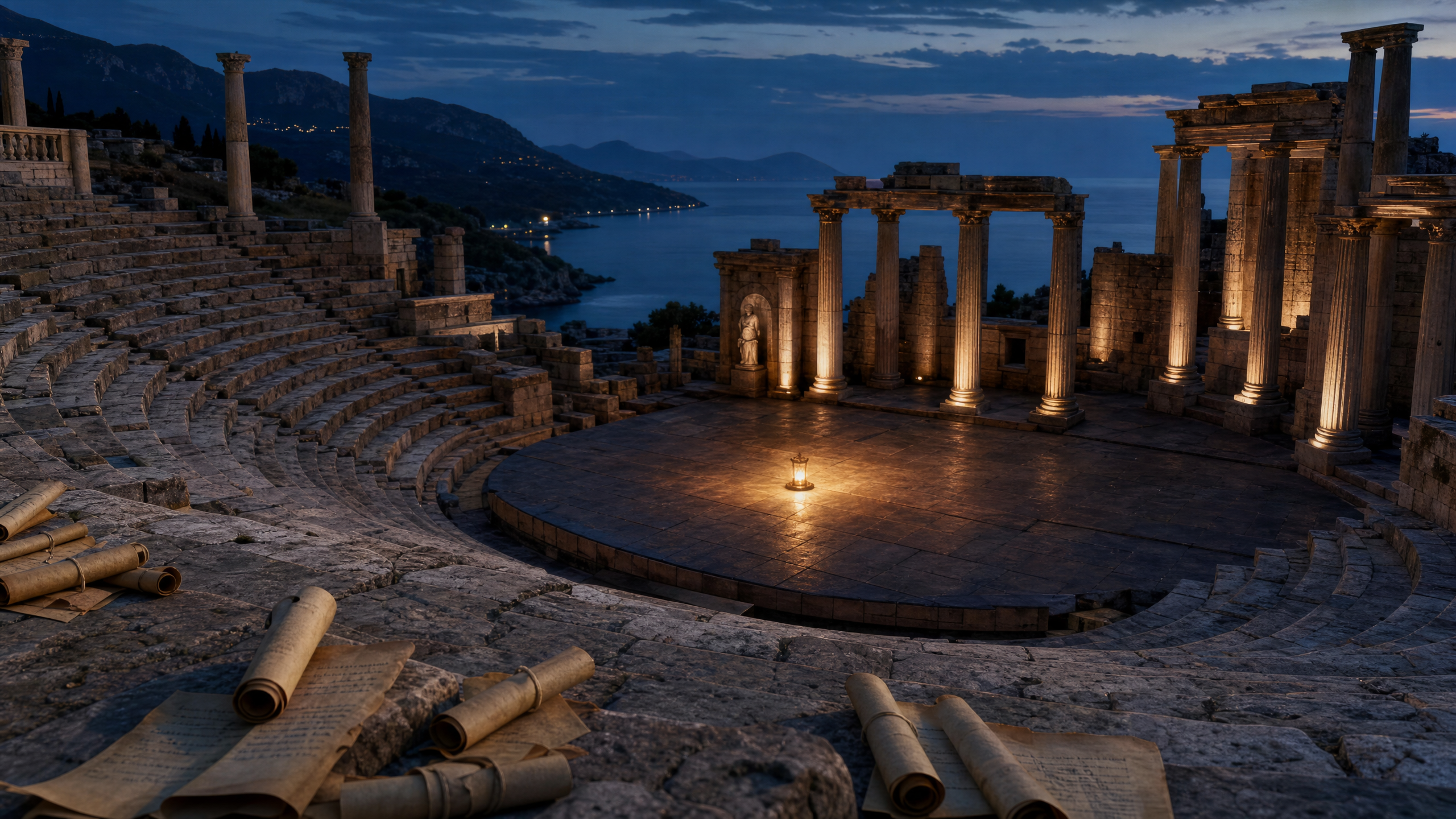
Aeneas and Dido: Love, Duty, and the Founding of Rome
A queen's love, a hero's destiny, and the agonizing choice that shaped an empire. Explore the tragic romance that forged Rome's future.
Historical Context
Founding of Carthage and the legendary origins of Rome (c. 12th century BC)
The Story
After the fall of Troy, the Trojan hero Aeneas embarks on a divinely ordained quest to found a new city in Italy. His journey leads him to Carthage, where he falls deeply in love with Queen Dido, a powerful and independent ruler who has established her own flourishing city. Their passionate affair is depicted with great emotional intensity, but Aeneas is ultimately reminded of his sacred duty to establish Rome. Torn between love and destiny, he reluctantly leaves Dido, who, heartbroken and betrayed, takes her own life. This tragic tale not only explores the profound conflict between personal desire and civic responsibility but also serves as a foundational myth for Rome, highlighting the sacrifices made for its destiny and subtly foreshadowing the Punic Wars between Rome and Carthage.
Deep Dive Essay
The full historical picture
A Tale of Two Cities: Love, Loss, and the Birth of an Empire
Imagine the Mediterranean world in the 1st century BC, a vibrant tapestry of empires, trade routes, and burgeoning ideas. Rome stood as the undisputed superpower, its legions having conquered vast territories from Gaul to Egypt. But this was not a time of serene peace. The republic, once the bedrock of Roman identity, was crumbling under the weight of civil wars and ambitious generals. Julius Caesar had been assassinated, and his adopted son, Octavian, was consolidating his power, soon to become the first emperor, Augustus. In this turbulent era, a new narrative was needed, one that could unify a fractured people and legitimize the new imperial order. It was a time for heroes, for destiny, and for stories that could bind a nation together.
Virgil's Grand Design
Enter Publius Vergilius Maro, known to us as Virgil. Born in 70 BC near Mantua, Virgil was a man of humble origins who rose to become one of Rome's most celebrated poets. By the time he was writing The Aeneid in the decades leading up to 19 BC, he was a mature artist, enjoying the patronage of Augustus himself. The emperor understood the power of myth and commissioned Virgil to create an epic that would rival Homer's Iliad and Odyssey, but with a distinctly Roman flavor. Virgil's task was monumental: to provide Rome with a glorious, divinely ordained origin story, linking its destiny to the ancient heroes of Troy.
The Aeneid is not just a tale of adventure; it is a meticulously crafted piece of propaganda, albeit one of profound literary merit. It tells the story of Aeneas, a Trojan prince, who, after the fall of his city, is chosen by the gods to lead his people to a new homeland in Italy. Along his arduous journey, he encounters the formidable Queen Dido of Carthage. Their love affair is a whirlwind of passion and tragedy, a poignant interlude in Aeneas's relentless pursuit of destiny. Virgil masterfully portrays Dido's strength and vulnerability, making her a sympathetic figure even as her fate is sealed by Aeneas's divine calling. The language is rich, the imagery vivid, and the emotional stakes are incredibly high, making it a compelling read even today.
Echoes of Empire
The Aeneid remains a cornerstone of Western literature, offering a window into the Roman psyche during its imperial zenith. It reveals the Roman emphasis on pietas duty to gods, family, and state above all else. Aeneas's agonizing choice between personal happiness with Dido and his sacred mission to found Rome encapsulates this core Roman value. Furthermore, the tragic end of Dido, and her curse upon Aeneas's descendants, serves as a powerful, almost prophetic, explanation for the bitter Punic Wars between Rome and Carthage centuries later. For a modern reader, The Aeneid is more than just an ancient epic; it is a timeless exploration of leadership, sacrifice, and the often-brutal demands of destiny, reminding us that even the grandest empires are built on the foundations of human stories, both glorious and heartbreaking.
Continue exploring
Back to Ancient & Classical Literature