The Rise of the Ruff: A Symbol of Status and Constraint
From a humble neck frill to an architectural marvel, the ruff became the ultimate statement of wealth and social standing, yet it also imposed rigid physical and social constraints.
Historical Context
Sumptuary laws, Protestant Reformation, Elizabethan era
The Story
The ruff, initially a practical frill to protect necklines, transformed into an extravagant fashion accessory by the late 16th century. Its increasing size and complexity, often requiring wire supports and starch, symbolized the wearer\'s wealth and status, as only the affluent could afford the fine linen, lace, and maintenance it demanded. Sumptuary laws often dictated who could wear such elaborate ruffs, reinforcing social hierarchies. The ruff\'s rigid structure also mirrored the increasing formality and strict social codes of the era, particularly in Protestant countries where modesty was paradoxically expressed through opulent, yet contained, displays. It became a visual metaphor for the era\'s blend of extravagance and control, a sartorial cage that both elevated and confined.
Deep Dive Essay
The full historical picture
The Rise of the Ruff: A Symbol of Status and Constraint
The World at the Time
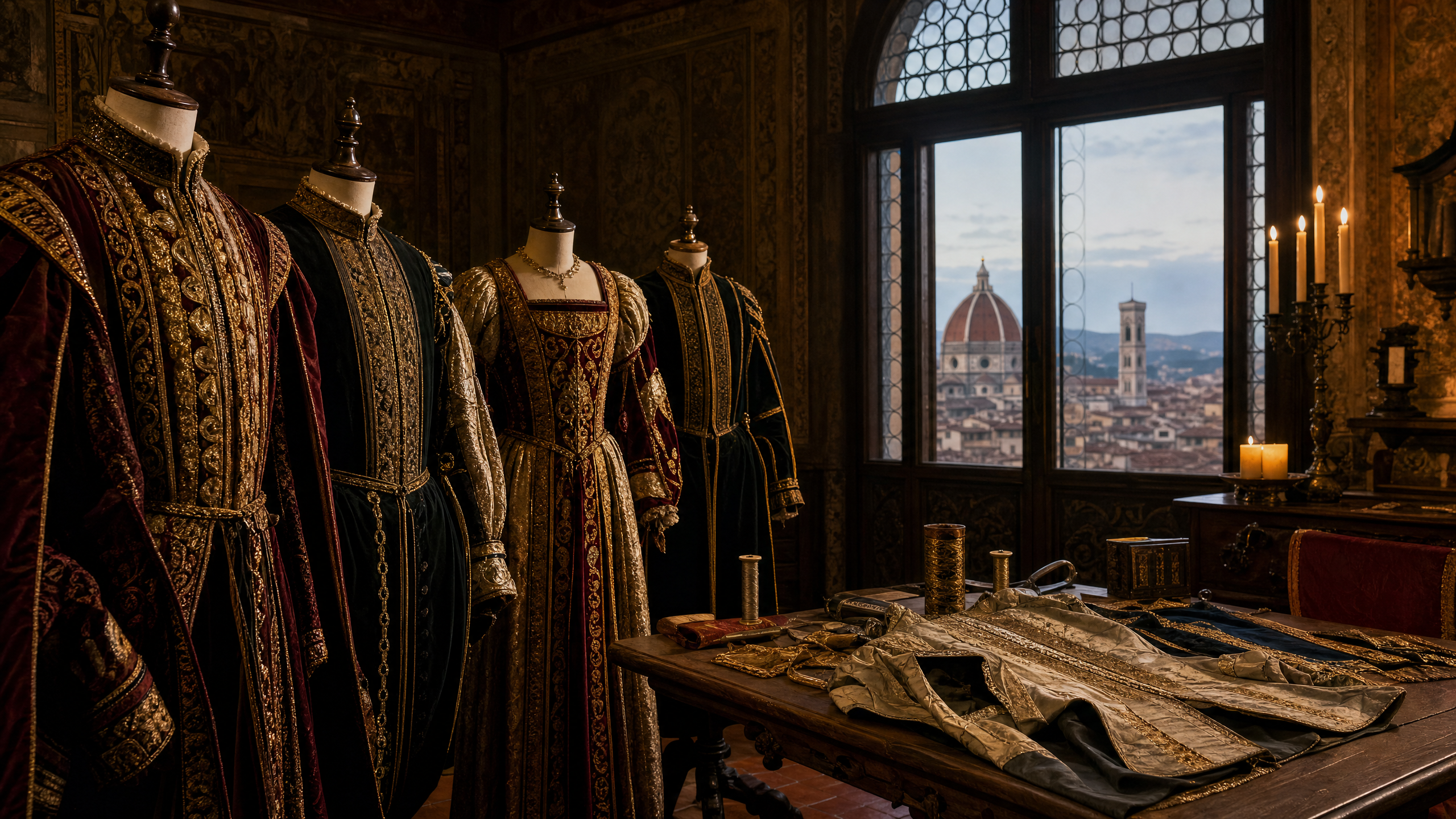
Imagine Europe in the 16th century: a continent ablaze with change and contradiction. This was an age of burgeoning empires, fierce religious upheaval, and the dazzling, yet dangerous, dance of power. From the opulent courts of France's Valois monarchs to the stern, emerging Protestant states, society was meticulously structured, with every individual's place clearly defined. Queen Elizabeth I of England, a monarch who understood the power of visual spectacle, reigned supreme, projecting an image of unshakeable authority through her elaborate attire. This was a world where outward appearance was not merely a matter of personal taste; it was a carefully constructed statement of one's wealth, lineage, and loyalty. Sumptuary laws, those fascinating legislative attempts to control consumption and maintain social order, dictated who could wear what, down to the very fabric and color. The Protestant Reformation, sweeping across northern Europe, preached modesty and piety, yet paradoxically, the era saw an explosion of sartorial extravagance, a tension that would be beautifully, if rigidly, expressed in fashion.
This was also a time of burgeoning global trade, bringing new materials and techniques to European shores. Fine linen from Holland, intricate lace from Italy and Flanders, and the revolutionary use of starch, a stiffening agent, all contributed to the escalating complexity of dress. The printing press, a relatively new invention, disseminated fashion plates and portraits, allowing trends to travel faster than ever before. In this vibrant, often volatile, landscape, clothing became a silent language, a powerful tool for communication in a world where every gesture, every detail, held meaning.
The Designer and the Work
The "designers" of the ruff were not singular individuals in the modern sense, but rather a collective of skilled artisans, tailors, and laundresses working within the demanding confines of European courtly fashion. These unnamed masters, driven by the insatiable desire of the elite to outshine one another, transformed a simple neck frill into a monumental statement. Initially, in the early 16th century, the ruff was a practical, modest band of pleated linen, designed to protect the neckline of a doublet or gown from dirt and wear. It was a utilitarian accessory, a washable barrier.
But practicality soon gave way to panache. By the 1570s and 1580s, the ruff had exploded in size and complexity. Imagine a veritable halo of starched linen and lace, often reaching a foot or more in diameter, framing the wearer's head. These colossal creations, sometimes called "cartwheel ruffs," required intricate pleating and copious amounts of starch to maintain their rigid, formidable shape. Wire supports, known as "underproppers" or "supportasses," were often hidden beneath the fabric, holding the ruff aloft like a delicate, yet unyielding, cage. The finest ruffs were crafted from exquisite, imported linen, adorned with precious lace, and required hours of meticulous preparation and maintenance, a testament to the wearer's boundless wealth and access to skilled labor. This wasn't just clothing; it was architectural fashion, a wearable sculpture demanding reverence and space.
Why It Still Matters
The evolution of the ruff is a remarkable sartorial journey that reveals much about the era that produced it. It stands as a powerful symbol of status, a visual barrier separating the elite from the common folk, whose sumptuary laws often forbade such ostentation. The ruff's rigid, unyielding structure, paradoxically both extravagant and confining, mirrors the strict social codes and increasing formality of the late 16th century. In Protestant countries, where piety was paramount, the ruff offered a fascinating contradiction: an opulent display of wealth contained within a framework of rigid, almost puritanical, order. It was a visual metaphor for the era's blend of extravagance and control, a sartorial cage that both elevated and confined. For the modern reader, the ruff reminds us that fashion is never just about fabric and thread; it is a profound reflection of human ambition, social hierarchy, and the intricate dance between individual expression and societal constraint. It shows us how even the smallest detail of dress can tell a grand story of a bygone world.
The Garment
The evolution of the ruff
Various European courts and tailors
Continue exploring
Back to Renaissance & Early Modern Fashion