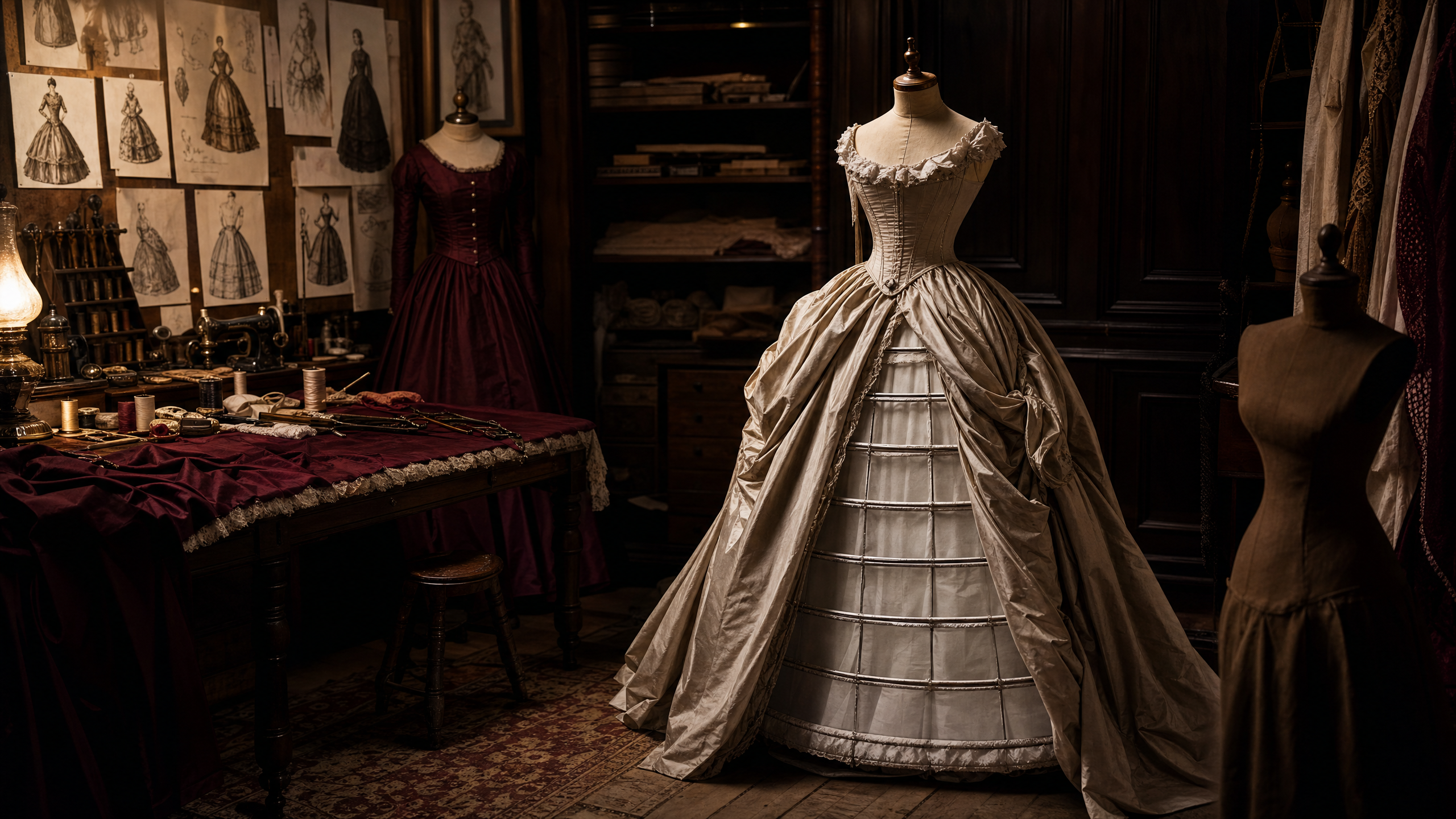
Queen Victoria's White Wedding: A Global Tradition Begins
Before 1840, brides wore any color. Then, a young queen walked down the aisle in a gown that changed weddings forever. Uncover the story behind the most iconic bridal tradition.
Historical Context
Queen Victoria's marriage to Prince Albert (1840)
The Story
When Queen Victoria married Prince Albert in 1840, she chose a white satin gown, a decision that would unexpectedly launch a global bridal tradition. Prior to this, brides typically wore their best dress, often in colors like blue, red, or even black. Victoria's choice was not only a personal preference but also a deliberate statement of patriotism, as the dress was made from English Spitalfields silk and adorned with Honiton lace, supporting British industries. The image of the young queen in her pristine white gown was widely publicized through engravings and fashion plates, quickly becoming an aspirational ideal. This single fashion moment transformed the white wedding dress into a powerful symbol of purity, innocence, and romantic love, a tradition that endures to this day and profoundly shaped Victorian societal expectations for women and marriage [4].
Deep Dive Essay
The full historical picture
Queen Victoria's White Wedding: A Global Tradition Begins
The World at the Time
Imagine February 10, 1840, in London, England. The world was a swirling vortex of change, with the industrial revolution reshaping landscapes and lives. Steam trains were beginning to crisscross the countryside, factories hummed with new machinery, and the British Empire was expanding its formidable reach across the globe. Society, however, remained rigidly stratified, with an intricate dance of class and custom dictating much of daily life. It was a time of burgeoning romanticism in art and literature, yet also of strict social codes, particularly for women. Marriage was less about individual passion and more about dynastic alliances, social standing, and economic security. Into this intricate tapestry stepped a young monarch, barely out of her teens, poised to make a decision that would ripple through centuries of bridal fashion.
This was a period of intense public fascination with the monarchy, albeit a monarchy still finding its footing after the excesses of previous reigns. Newspapers and new forms of printed media, like fashion plates and engravings, were becoming increasingly accessible, allowing images and ideas to spread with unprecedented speed. The collective gaze of the nation, and indeed, much of the Western world, was fixed on the young Queen Victoria. Her every move, every pronouncement, and every sartorial choice was scrutinized, debated, and often, emulated.
The Designer and the Work
At just 20 years old, Queen Victoria was already a formidable figure, having ascended to the throne in 1837. She was not a fashion designer in the modern sense, but as a monarch, her personal choices carried immense weight and influence. For her marriage to her beloved cousin, Prince Albert of Saxe-Coburg and Gotha, Victoria made a decision that, while seemingly personal, was steeped in both sentiment and shrewd political calculation. She chose to wear white.
This was a radical departure from tradition. Prior to Victoria, brides typically wore their finest dress, often a practical garment that could be re-worn for other occasions. Colors like rich reds, deep blues, or even somber blacks were common, chosen for their practicality and ability to hide stains. Victoria's gown, however, was a vision of pristine white satin, a fabric that would show every speck of dirt, making it utterly impractical for re-wear. This deliberate impracticality was a statement in itself: a symbol of luxury and a departure from the utilitarian. The dress was crafted from glorious English Spitalfields silk and adorned with exquisite Honiton lace, a conscious choice to support British industries and showcase the nation's craftsmanship. It was a masterpiece of delicate needlework, featuring intricate floral motifs that spoke to the romantic sensibilities of the age. The overall effect was one of ethereal beauty, a stark contrast to the more somber bridal attire of the past.
Why It Still Matters
Queen Victoria's white wedding dress is more than just a beautiful garment; it is a cultural touchstone that profoundly shaped our understanding of marriage and femininity. Her choice, widely disseminated through countless engravings and fashion plates, transformed the white wedding dress from a personal preference into a powerful symbol. It became synonymous with purity, innocence, and romantic love, an aspirational ideal for countless brides across the globe. This single fashion moment solidified the image of the blushing bride in white, an image that continues to dominate wedding traditions today. It reveals how deeply intertwined fashion is with societal values, demonstrating how a queen's personal choice could inadvertently launch a global tradition and forever alter the landscape of bridal wear, cementing the Victorian ideal of womanhood and marriage for generations to come.
The Garment
Queen Victoria's White Wedding Dress
Queen Victoria
Continue exploring
Back to Revolutionary & Romantic Fashion